How To Stretch Your Homebuying Options Without Stretching Your Budget
Let’s be honest—house hunting can feel a lot like online dating. You start with a long list of “non-negotiables,” swipe past anything that doesn’t check every box, and before you know it, you’re wondering why nothing seems to work.
Here’s the truth most buyers don’t realize right away: your budget doesn’t usually fail you—your wish list does.
In today’s housing market, one of the smartest (and most underrated) strategies isn’t earning more or waiting longer. It’s learning how to be strategically flexible. And no, that doesn’t mean settling. It means knowing what actually matters—and what can wait.
Let’s break it down.
Why A Flexible Wish List Is A Homebuyer’s Secret Weapon
Think of your home search like driving down a narrow road. Your budget is one guardrail. Your wish list is the other. When prices rise or inventory shrinks, one of those guardrails has to stay firm—and spoiler alert, it’s usually the budget.
So what’s left to adjust?
Your expectations.
That might sound uncomfortable at first, but here’s the good news: most successful buyers already do this, whether they plan to or not.
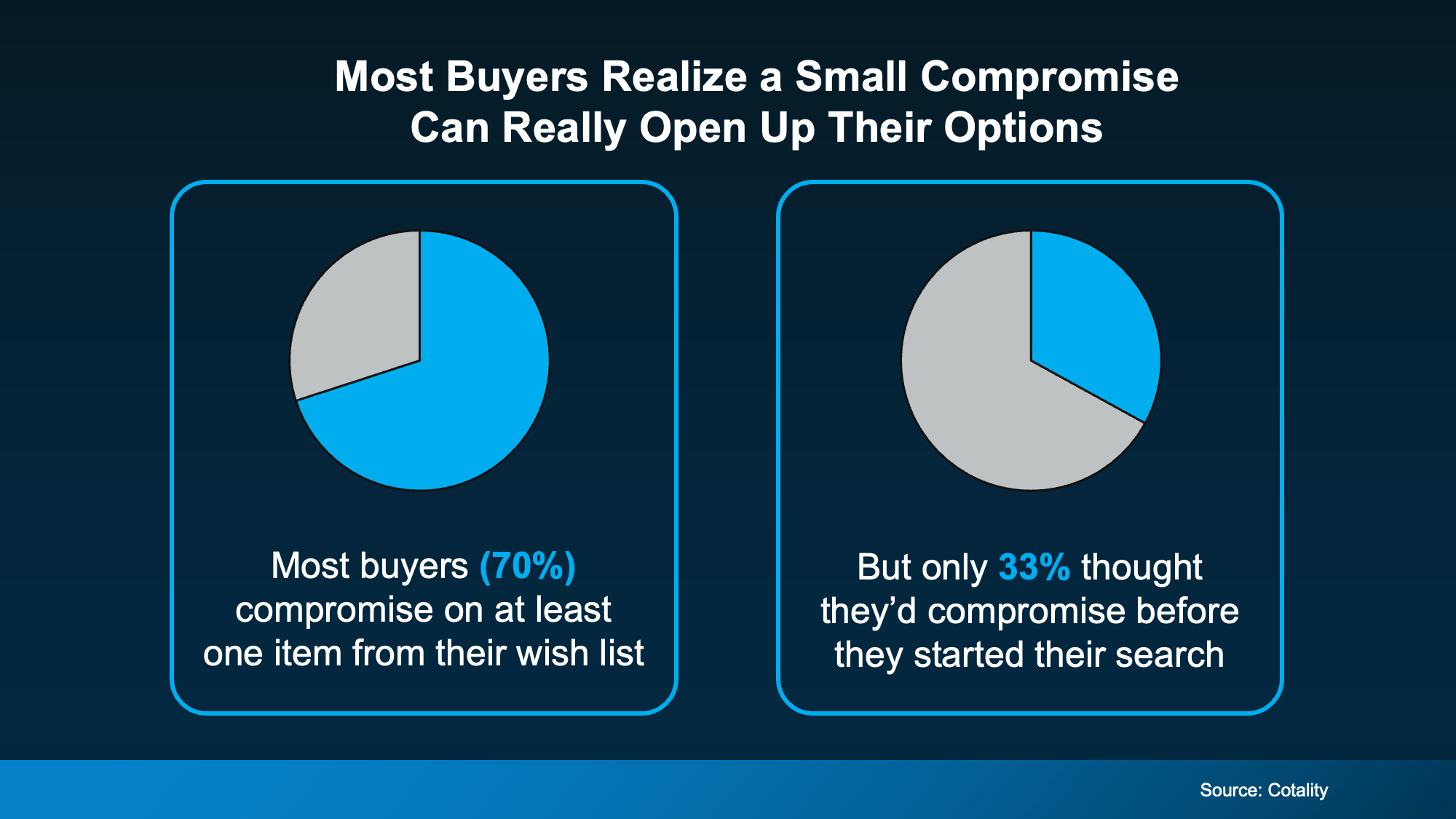
According to recent housing research, about 70% of buyers ended up compromising on at least one feature from their original wish list. Yet before starting their search, only 33% thought they’d have to compromise at all.
What changed?
Experience.
Once buyers actually started touring homes, they realized something powerful: some things matter far more than others—and not everything has to be perfect on day one.
The Big Realization: What You Can Change vs. What You Can’t
This is where everything clicks.
There are things you can change fairly easily after you move in:
-
Swap carpet for hardwood floors
-
Upgrade countertops to quartz or marble
-
Refresh bathrooms with new fixtures and tile
-
Paint, landscape, and modernize finishes
These are cosmetic upgrades. They’re temporary problems with permanent solutions.
But then there are things you can’t easily change:
-
The location of the home
-
The size of the lot
-
The layout and flow of the house
-
The number of bedrooms or bathrooms
-
Proximity to family, work, schools, or support systems
Trying to “fix” these later is like trying to turn a sedan into an SUV—it’s expensive, complicated, and often impossible.
That’s why smart buyers learn to prioritize bones over beauty.
Why Location, Layout, and Structure Matter Most
Here’s a simple way to think about it:
You live in a home’s layout every single day—but you notice countertops only once in a while.
A great location shortens your commute, improves your lifestyle, and boosts long-term value. A functional layout makes daily routines smoother. Solid construction gives you peace of mind.
Shiny finishes? Nice—but optional.
Once buyers understand this, their search transforms. Homes they once dismissed suddenly become opportunities instead of deal-breakers.
And that’s where flexibility pays off.
A Simple Exercise That Instantly Expands Your Options
If you’re feeling stuck—or endlessly scrolling listings that don’t excite you—it’s time for a reset.
Grab a pen (or your notes app) and write down everything you want in a home. Then divide it into three clear categories.
1. Must-Haves (Your Non-Negotiables)
These are the features that make daily life work. Without them, the home simply won’t fit your lifestyle.
Examples include:
-
Minimum number of bedrooms or bathrooms
-
Commute time or proximity to work
-
Safety and neighborhood considerations
-
Accessibility needs
-
Being close to family or a support system
If it affects your quality of life every day, it belongs here.
2. Nice-to-Haves (Great, But Not Essential)
These are features you’d love—but could live without if needed.
Think:
-
A fenced-in backyard
-
Dual vanities or walk-in closets
-
A garage instead of a carport
-
A finished patio or upgraded landscaping
They enhance comfort, not functionality.
3. Dream Features (The “Someday” List)
These are the extras—the cherry on top.
Examples:
-
Chef’s kitchen
-
Spa-style primary bathroom
-
Outdoor kitchen or pool
-
Designer finishes throughout
Amazing to have? Absolutely. Required? Not right now.
The Mistake Most Buyers Don’t Realize They’re Making
Here’s where things usually go sideways.
Many buyers accidentally treat nice-to-haves like must-haves.
That single mindset shift can dramatically limit your options—and inflate your frustration.
The moment you loosen just one or two expectations, something magical happens:
More homes suddenly qualify.
Homes you skipped before? Worth a second look.
Listings that felt “almost right”? Suddenly viable.
Flexibility doesn’t shrink your standards—it expands your possibilities.
Small Trade-Offs, Big Wins
Let’s reframe the idea of compromise.
Choosing flexibility isn’t giving something up. It’s trading short-term preferences for long-term progress.
Maybe that means:
-
Buying a home that needs light cosmetic updates
-
Choosing a smaller yard for a better location
-
Accepting an older kitchen for a stronger floor plan
These aren’t losses. They’re strategic moves.
Remember: paint is cheaper than relocating, and renovations are easier than moving walls.
The goal isn’t perfection. It’s alignment—with your budget, your lifestyle, and your future plans.
Why “Good Enough” Often Turns Into “Perfect Later”
Here’s something experienced homeowners know:
Very few people stay in their “dream home” forever.
Most start with a home that fits their needs right now, then improve it over time—or build equity and move up later.
That starter home?
-
Builds financial stability
-
Locks in housing costs
-
Creates opportunities down the road
Waiting for the perfect home can cost you years of appreciation and growth. Buying the right home puts you in motion.
And momentum matters.
How A Real Estate Agent Helps You Spot Hidden Opportunities
If you’re unsure where to stay firm and where to flex, this is where a trusted real estate agent becomes invaluable.
A great agent helps you:
-
Separate true deal-breakers from preferences
-
Spot homes with strong potential
-
Identify upgrades that are easy vs. expensive
-
Avoid overpaying for cosmetic features
-
See value others might overlook
They don’t just show houses—they help you make smarter decisions.
Sometimes all it takes is a second perspective to turn “This won’t work” into “Wait… this could actually be perfect.”
The Long-Term Payoff Of Buying With Intention
When you focus on fundamentals—location, layout, and structure—you’re setting yourself up for success beyond move-in day.
You gain:
-
Better resale value
-
Greater lifestyle satisfaction
-
More financial flexibility
-
Less buyer’s remorse
And perhaps most importantly, you stop feeling stuck.
Because the right home isn’t the one with the longest feature list—it’s the one that supports your life and your future.
Bottom Line: Flexibility Creates Opportunity
Your next home doesn’t need to check every box.
It just needs to check the right ones.
When you loosen your wish list—even slightly—you open doors that were closed before. And with the right guidance, those doors often lead to opportunities you didn’t expect.
If you’re ready to find a home that fits both your budget and your life, start by revisiting your wish list. A little flexibility today can unlock a lot more tomorrow.
And sometimes, that’s all it takes to finally get the keys.
Recent Posts







GET MORE INFORMATION