Smart Home Updates That Actually Pay You Back When You Sell
Selling your home isn’t just about putting up a “For Sale” sign and hoping for the best. Think of it more like preparing a car for resale. You wouldn’t skip a wash, ignore a dented door, and expect top dollar, right? The same logic applies to your house.
If you’re planning to sell this spring, here’s a truth many homeowners learn too late: waiting until the season officially starts is already behind the curve. Today’s buyers are more selective, more informed, and—most importantly—spoiled with options. That means your home doesn’t just need to be “nice.” It needs to stand out.
The good news? You don’t need a full-blown renovation or a second mortgage to make that happen. You just need to focus on the home updates that actually deliver a return on investment (ROI).
Let’s break it down.
Why Timing Matters More Than Ever in Today’s Housing Market
A few years ago, homes practically sold themselves. Buyers were lining up, waiving contingencies, and overlooking flaws they’d never tolerate today. That market is gone.
Now, buyers have time to compare. They scroll listings like they’re browsing Netflix—one bad thumbnail, and they move on. If your home looks like “work,” many buyers won’t even book a showing.
That’s why starting updates early matters. Spring selling season rewards homes that are already polished, not ones still waiting for repairs to get done. Scrambling at the last minute often leads to rushed decisions, higher costs, and half-finished projects. None of those help your bottom line.
Understanding ROI: Why Some Updates Matter More Than Others
Not all home improvements are created equal. Some make you feel good as a homeowner but barely move the needle when you sell. Others quietly add value in ways buyers instantly recognize.
This is where ROI data becomes your best friend.
Each year, housing research firms like Zonda analyze which renovations and upgrades deliver the biggest payoff at resale. Their findings often surprise homeowners—because the biggest returns don’t always come from the biggest projects.
Spoiler alert: ripping out your kitchen isn’t always the hero of the story.
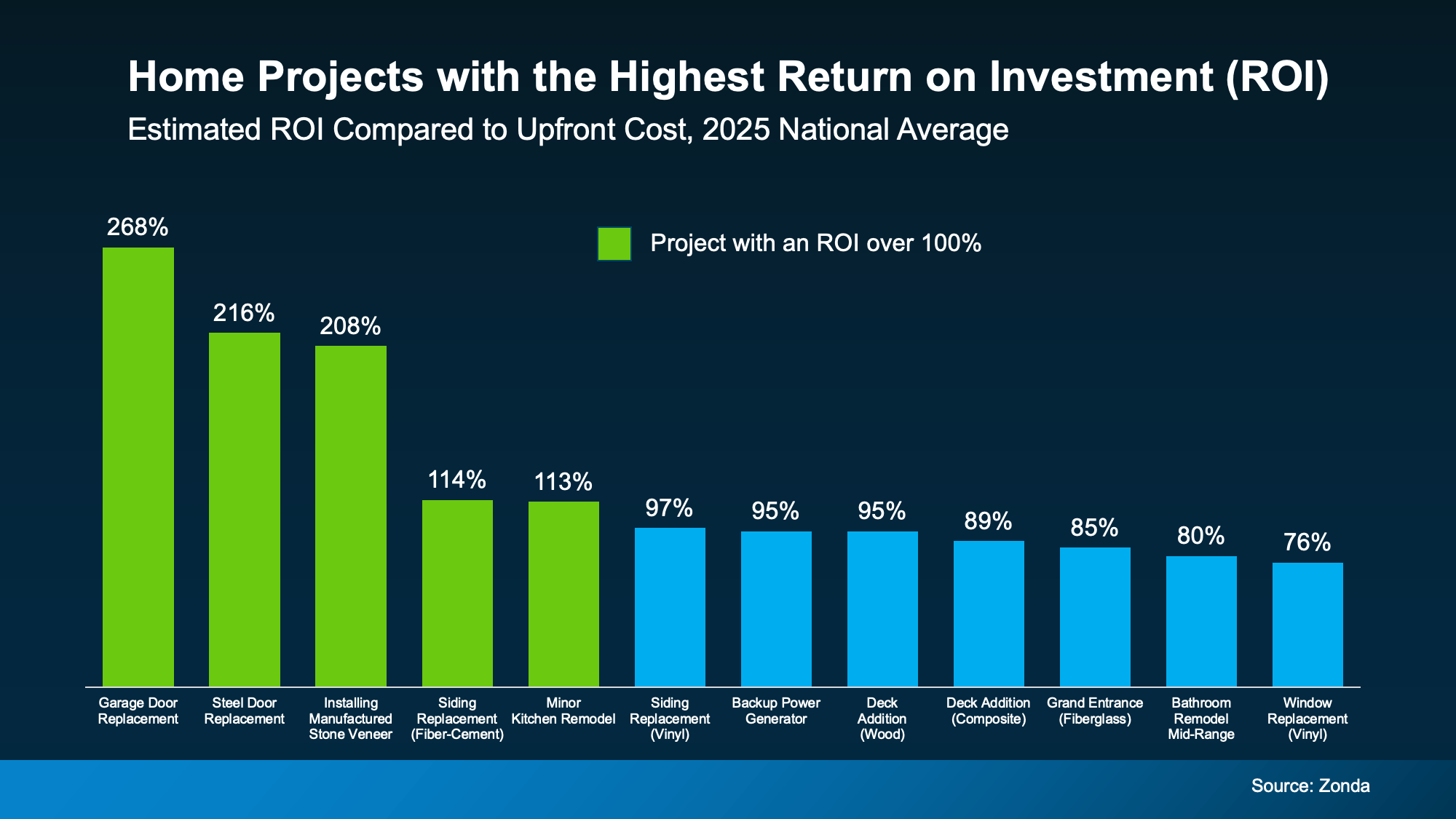
Home Improvement Projects That Tend to Pay Off
When you look at ROI data across the country, a clear pattern emerges. The projects that consistently perform well focus on first impressions, functionality, and visual freshness.
Some of the strongest performers include:
-
Replacing entry doors (especially steel or fiberglass)
-
Updating garage doors
-
Minor kitchen refreshes
-
Bathroom updates without full gut renovations
-
Exterior improvements like siding or trim refreshes
Notice something interesting? Several of the top performers involve doors. Not kitchens. Not luxury bathrooms. Doors.
Why? Because doors are the handshake of your house. They’re one of the first things buyers see, touch, and judge—often subconsciously.
Small Updates With Big Visual Impact
Here’s where homeowners often breathe a sigh of relief. The updates that deliver strong ROI don’t always require major construction, permits, or weeks of disruption.
Sometimes, the smallest changes act like a fresh haircut—they instantly make everything look better.
Paint: The Unsung Hero of ROI
Few updates deliver as much bang for your buck as paint. Fresh, neutral walls brighten spaces, make rooms feel larger, and help buyers imagine their own lives there.
Scuffed walls, bold colors, or worn trim? Those whisper “maintenance” to buyers. Fresh paint says, “This home has been cared for.”
Light Fixtures: The Jewelry of a Home
Outdated or builder-grade light fixtures can drag a room down faster than you’d expect. Swapping them out is relatively inexpensive, but the visual upgrade is dramatic.
Think of lighting like accessories. The right pieces elevate the entire outfit.
Hardware and Fixtures
Cabinet pulls, doorknobs, and faucets are small details—but buyers notice them. Coordinated, modern hardware sends a subtle signal that the home is updated, even if major systems haven’t changed.
Window Treatments and Draperies
Old, heavy, or mismatched window coverings can make rooms feel dark and dated. Clean, simple treatments let in light and create a sense of openness buyers love.
As interior designer and home stager Mallory Slesser explained to the National Association of Realtors:
“If you’re looking for affordable updates that pack a punch, dollar for dollar, I would say painting; changing out light fixtures; changing out hardware; maybe new draperies or window treatments. Those are all cost-effective ways to make a big statement. It really changes the space.”
She’s right. These updates don’t scream for attention—but they quietly do their job.
Why “Move-In Ready” Is a Powerful Selling Point
In today’s market, buyers aren’t just buying square footage. They’re buying convenience, confidence, and peace of mind.
When a home feels move-in ready, buyers stop calculating repair costs in their heads. Instead of thinking, “We’ll have to fix that,” they think, “We could move in next month.”
That mental shift is huge.
Homes that feel updated and well-maintained often command higher offers—not because buyers love spending more, but because they’re avoiding future headaches.
The Hidden Value of Tackling Deferred Maintenance
Not every worthwhile update shows up on a trendy ROI list. Sometimes, the most valuable improvements are the ones you’ve been putting off.
Ask yourself honestly:
-
Is the front door scratched, faded, or sticking?
-
Are the shutters peeling?
-
Is the yard covered in leaves or patchy grass?
-
Are there scuff marks where kids play or pets roam?
These details might seem minor, but to buyers, they add up quickly. Deferred maintenance makes buyers wonder what else hasn’t been taken care of.
Fixing these issues won’t just improve your home’s appearance—it removes doubt from the buyer’s mind. And doubt is expensive.
Why Doing Nothing Can Actually Cost You Money
It’s tempting to think, “I’ll just price it accordingly.” But in reality, homes that need visible work often sell for less than the cost of the repairs themselves.
Why? Because buyers tend to overestimate both the cost and the hassle of fixing things. What might cost you $2,000 feels like $10,000 to someone who’s already stretching their budget.
In a market with choices, many buyers simply skip homes that look like projects. That means fewer showings, longer time on market, and eventually—price reductions.
National Data Is a Guide, Not a Game Plan
Here’s the most important thing to remember: ROI data is a starting point, not a one-size-fits-all strategy.
Buyer preferences vary wildly based on:
-
Location
-
Price range
-
Neighborhood norms
-
Local competition
A project that adds value in one market could be unnecessary—or even overkill—in another. For example, a high-end upgrade in a modest neighborhood might not return its cost, while basic updates could be expected just to compete.
Why Talking to a Local Real Estate Expert Comes First
Before you pick up a paintbrush or call a contractor, talk to a local real estate professional. This single step can save you thousands.
An experienced agent can help you answer questions like:
-
Which updates do buyers in this market expect?
-
What can you skip without hurting your sale?
-
Where will a small investment make the biggest impact?
-
Is it better to update—or sell as-is?
This guidance helps you avoid two costly mistakes: over-improving and under-preparing.
Think of your agent as a financial advisor for your home—not just someone who lists it.
How to Prioritize Updates Without Feeling Overwhelmed
If everything feels important, start with this simple framework:
-
Safety and functionality first – Fix anything broken or concerning.
-
First impressions next – Entryway, exterior, and curb appeal.
-
High-visibility interiors – Living room, kitchen, primary bath.
-
Cosmetic touch-ups last – Paint, fixtures, and finishing details.
You don’t have to do everything. You just have to do the right things.
Bottom Line: Smart Updates Beat Big Renovations
If you’re selling this spring, you still have time to make updates that help your home stand out—without taking on a massive renovation or draining your savings.
The homes that win aren’t always the biggest or fanciest. They’re the ones that feel cared for, current, and easy to say yes to.
If you’re unsure where to start, a quick conversation can help you prioritize the updates that will pack the biggest punch for your specific home and market.
So, let me ask you this: what’s one upgrade you’ve been thinking about—but aren’t sure is worth it?
Recent Posts







GET MORE INFORMATION