WILL HOME PRICES DROP? HERE’S WHAT SMART BUYERS NEED TO KNOW BEFORE WAITING
“Should I buy now… or wait for prices to fall?”
That single question is keeping countless buyers on the sidelines today. And honestly? It makes sense. Buying a home is one of the biggest financial decisions most people will ever make. Nobody wants to purchase at the wrong time only to watch property values dip afterward.
With headlines constantly talking about market shifts, interest rates, and economic uncertainty, it’s easy to feel nervous. But here’s the thing many people miss: real estate has always been a long game.
And when you zoom out instead of focusing on short-term noise, the story becomes much clearer.
The Truth About Home Prices Over Time
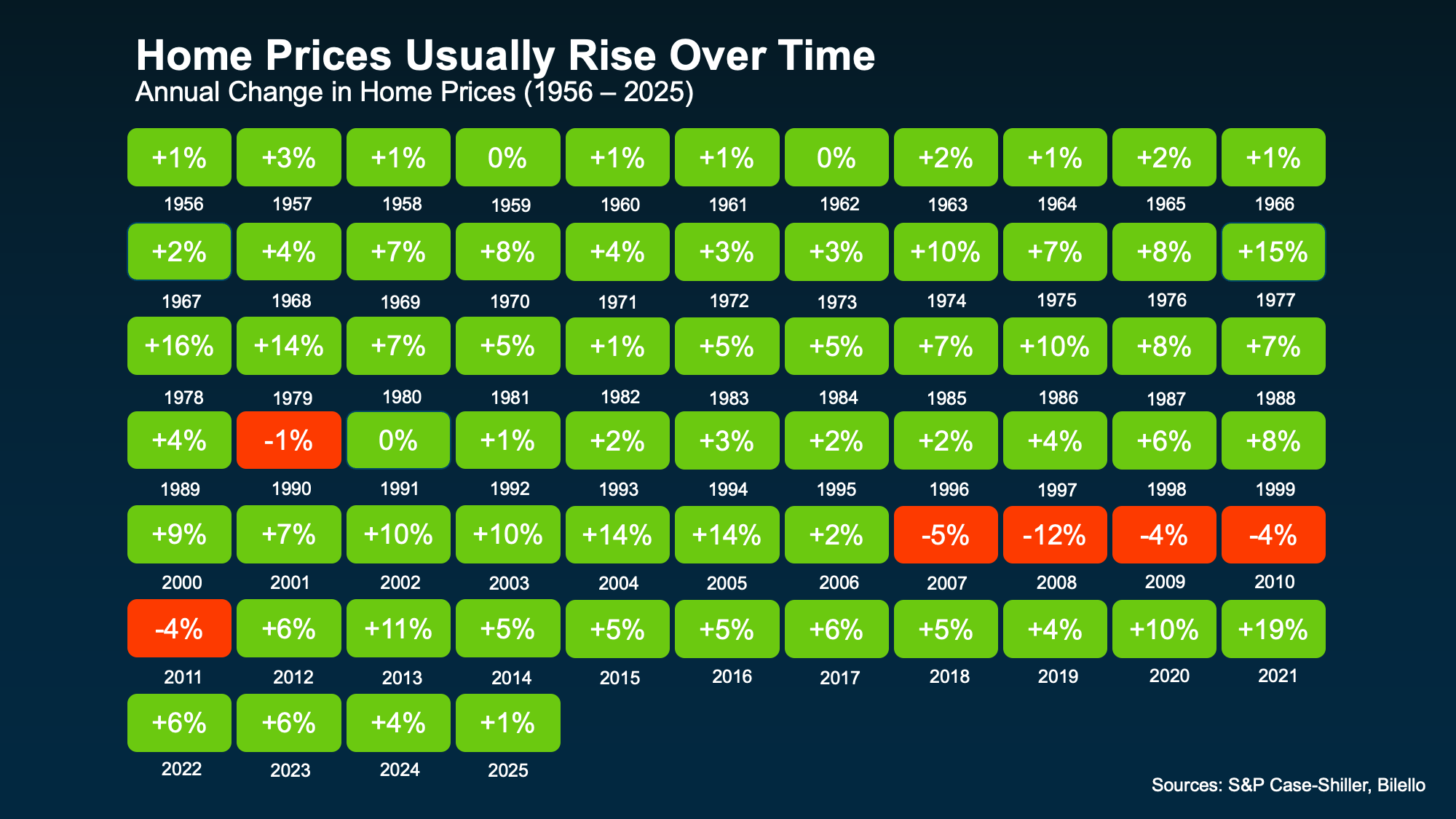
If you look back at housing data over the past several decades, one trend stands out loud and clear: home prices generally rise over time.
Yes, there have been moments when values slowed down or dipped slightly. But historically, those declines were temporary. In most years, home prices either stayed stable or continued climbing.
The biggest exception? The housing crash of 2008.
That period was unusual because it involved risky lending practices, inflated borrowing, and financial systems that simply weren’t sustainable. Today’s housing market operates very differently. Lending standards are tighter, buyers are more qualified, and inventory remains limited in many areas.
So while some markets may experience minor corrections or cooling periods, a massive nationwide collapse isn’t what the data typically supports.
Think about it like climbing a mountain. There may be a few dips and rocky paths along the way, but the overall direction still trends upward.
That’s exactly how real estate has behaved for generations.
Why Home Prices Usually Keep Rising
So why do home values continue increasing year after year? It comes down to a few simple but powerful forces.
1. People Will Always Need Homes
Life never stops moving.
People get married. Families grow. Careers change. Retirements happen. Divorces happen too. Some people relocate for opportunities, while others downsize for simplicity.
No matter what the economy is doing, people still need places to live.
That constant demand keeps the housing market alive. Even during slower seasons, there are always buyers entering the market because housing isn’t a luxury for most people — it’s a necessity.
And when demand continues, prices tend to stay resilient.
Housing Supply Still Isn’t Keeping Up
Another major reason home prices remain strong is the shortage of available homes.
While inventory has improved slightly in some areas, many markets still don’t have enough homes to meet buyer demand. That imbalance creates pressure on prices.
Imagine a concert with 500 tickets but 5,000 fans trying to get in. What happens? The value of those tickets rises.
Housing works the same way.
When there are more buyers than available homes, competition naturally pushes prices upward.
This is one of the key reasons experts continue to believe long-term home values will remain strong despite occasional market fluctuations.
Inflation Quietly Pushes Prices Higher
Inflation impacts nearly everything we buy — groceries, gas, construction materials, and yes, homes too.
As the cost of labor, land, and materials rises over time, the price of building and maintaining homes increases as well. That naturally contributes to rising property values.
In other words, a home purchased today may cost significantly more five or ten years from now simply because the dollar itself changes over time.
That’s why real estate has often been viewed as a hedge against inflation.
While money sitting in a savings account may slowly lose purchasing power, property values historically tend to grow alongside inflation.
The Danger of Trying To “Time the Market”
Many buyers spend years waiting for the “perfect moment” to buy.
But here’s the challenge: predicting the housing market perfectly is almost impossible.
Even professional economists disagree with one another all the time.
Some buyers waited in 2020 expecting prices to crash. Instead, prices surged dramatically in many markets. Others delayed purchases hoping mortgage rates would drop quickly, only to face higher prices later.
Trying to perfectly time real estate is a little like standing on the beach waiting for the “perfect” wave. Sometimes you wait so long that you miss the ride completely.
The better question often isn’t:
“Will prices drop next month?”
Instead, ask yourself:
“Will buying a home improve my life over the next five to ten years?”
That’s where the real value usually comes from.
Real Estate Is a Long-Term Investment
One of the biggest mistakes buyers make is focusing too heavily on short-term market movement.
Real estate rewards patience.
Historically, homeowners who stay in their property for several years are much more likely to benefit from appreciation and equity growth. That’s why experts often recommend buying only if you plan to stay for at least five years.
Why five years?
Because time helps smooth out short-term market fluctuations.
Even if prices temporarily level off after you buy, long-term appreciation has historically helped homeowners recover and continue building wealth over time.
And that wealth-building effect can become powerful.
How Rising Home Values Build Wealth
Every mortgage payment you make helps build equity — which is essentially your ownership stake in the property.
At the same time, if your home increases in value, your net worth grows too.
This is one reason homeownership has long been associated with wealth creation.
Rent payments help build a landlord’s equity.
Mortgage payments help build yours.
That doesn’t mean owning a home is always the right move for every person or every situation. But for many people, buying a home becomes one of the strongest financial foundations they ever create.
Short-Term Dips Don’t Always Mean Disaster
It’s important to remember that real estate is local.
Some cities may experience temporary price reductions while others continue rising steadily. Certain neighborhoods may cool off while nearby areas stay highly competitive.
That’s normal.
Housing markets don’t move in perfect sync across the country.
And small declines aren’t automatically signs of a major crash. Sometimes markets simply pause after periods of rapid growth. Other times, they adjust slightly as inventory increases.
But history consistently shows that long-term trends matter far more than temporary fluctuations.
A few months of slower activity rarely define the future value of a home held for many years.
Should You Buy a Home Right Now?
The answer depends less on the market — and more on your personal situation.
Buying may make sense if:
- You’re financially stable
- You plan to stay in the home for several years
- You’re ready for the responsibilities of ownership
- The monthly payment comfortably fits your budget
- Owning aligns with your long-term goals
On the other hand, rushing into a purchase purely out of fear or pressure usually isn’t wise either.
The best real estate decisions happen when timing meets preparedness.
Not panic.
Why Waiting Could Also Have Risks
Many buyers focus only on the risk of prices falling.
But there’s another side people often ignore: the risk of waiting too long.
If home prices continue rising while you delay, you could face:
- Higher purchase prices later
- Increased competition
- Larger down payment requirements
- Continued rent increases
- Lost years of equity growth
Waiting isn’t automatically safer. Sometimes it simply delays progress.
That’s why evaluating both sides matters.
The Bigger Picture Buyers Should Remember
Headlines are designed to grab attention. Fear sells. Uncertainty creates clicks.
But real estate has historically rewarded people who think long term instead of reacting emotionally to short-term noise.
Home values may not rise every single year in every single market. Some fluctuations are completely normal.
Yet over decades, the overall pattern has remained remarkably consistent: home prices generally trend upward.
That’s why homeownership continues to be viewed as one of the most reliable long-term investments for building wealth and financial stability.
Final Thoughts: Don’t Let Fear Make the Decision for You
So, are home prices going to fall?
In some local markets, maybe slightly. In others, prices may continue rising. Real estate is never perfectly predictable.
But history shows that temporary declines are usually just that — temporary.
The bigger story is that home values have consistently increased over time, helping generations of homeowners build equity, stability, and wealth.
The goal isn’t to perfectly time the market.
The goal is to make a smart move that fits your life, your finances, and your future — then stay in it long enough to benefit from the long-term trend.
And sometimes, that long-term perspective changes everything.
Recent Posts






GET MORE INFORMATION