The Right Asking Price: How To Sell Your Home Faster And For Top Dollar

Let’s get straight to it.
When you decide to sell your home, there’s one move that can either fast-track your success or quietly sabotage your entire sale.
It’s not your listing photos.
It’s not your staging.
It’s not even the market.
It’s your asking price.
Set it right, and buyers lean in. Set it wrong, and they scroll past without a second thought. The price you choose determines whether your home sparks a bidding war—or sits on the market collecting dust.
So how do you make sure you get it right?
Let’s break it down.
Why Your Home’s Asking Price Is Everything
Think of your asking price like the headline of a news article. If it grabs attention, people read on. If it misses the mark, they move on.
Buyers today are smarter, faster, and more informed than ever. With a few taps, they can compare your property to dozens of others in your area. If your price feels off—even slightly—you’re out of the game before you ever knew you were playing.
And here’s the tricky part: pricing isn’t just about numbers. It’s about psychology.
Price too high? Buyers assume you’re unrealistic.
Price too low? They wonder what’s wrong with the house.
Price it right? You create urgency, competition, and momentum.
And momentum is everything in real estate.
The #1 Pricing Mistake Sellers Make
Let’s talk about the most common trap homeowners fall into.
They trust the wrong number.
If you’re thinking about selling, you’ve probably typed your address into an online home value estimator. It’s quick. It’s free. And best of all, you don’t have to talk to anyone.
But here’s the uncomfortable truth:
Those tools don’t know your house.
They don’t know the new roof you installed.
They don’t know the kitchen remodel you spent months perfecting.
They don’t know your street is suddenly one of the most desirable pockets in the neighborhood.
An algorithm can crunch data—but it can’t walk through your front door.
Online Home Value Estimates: Convenient But Incomplete
Online home valuation tools rely heavily on public data and past sales. They look backward, not forward. It’s like trying to drive by staring only in the rearview mirror.
Sure, they pull comparable sales.
Yes, they analyze trends.
But they miss critical details that influence your home’s true market value.
They can’t evaluate:
-
The condition of your property
-
Recent renovations not yet reflected in public records
-
Unique architectural features
-
Buyer demand in your specific neighborhood this month
-
The emotional appeal your home creates in person
In a shifting real estate market, even a small pricing error can cost you thousands.
Overprice your home, and it lingers. Buyers lose interest. You end up cutting the price later, often below where you should have started.
Underprice it, and you risk leaving money on the table—money you’ll never get back.
When you’re making one of the largest financial transactions of your life, is “good enough” really good enough?
Why Accurate Home Pricing Matters More Than Ever
Today’s buyers have options. Lots of them.
In competitive markets, they compare listings side by side. They analyze price per square foot. They track how long homes stay on the market. They notice price reductions.
If your home is priced even slightly above market value, it can lose its edge instantly.
And here’s something many sellers don’t realize: the first two weeks your home is listed are the most powerful.
That’s when your listing is fresh.
That’s when buyer interest is highest.
That’s when you have the most leverage.
Miss that window because your price was too high? You may never fully recover the momentum.
Pricing correctly from day one isn’t just important—it’s strategic.
The Power Of Local Real Estate Expertise
So if algorithms fall short, what’s the alternative?
Local market expertise.
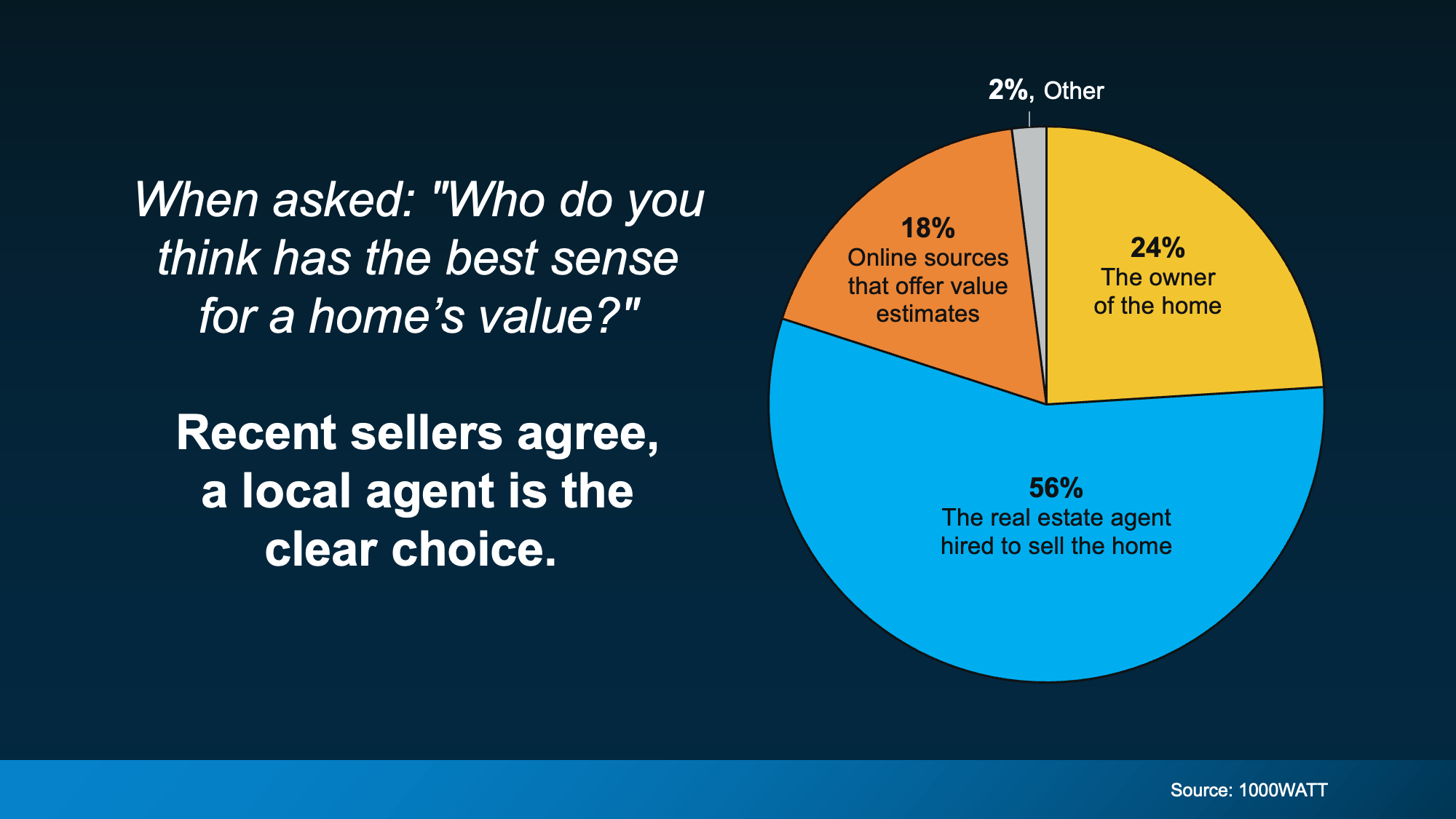
They know:
-
What buyers are actually paying right now
-
Which homes are getting multiple offers
-
What features today’s buyers are willing to pay more for
-
How your property compares to active competition
-
How to position your home to create urgency
There’s a massive difference between knowing what homes sold for last quarter and knowing what buyers are fighting over this week.
That difference can mean thousands of dollars in your pocket.
Comparative Market Analysis: The Real Way To Price A Home
A professional Comparative Market Analysis (CMA) goes far beyond automated estimates.
It considers:
-
Recently sold homes
-
Currently active listings
-
Pending sales
-
Expired listings
-
Condition, upgrades, and presentation
-
Micro-neighborhood trends
And here’s something you might not expect: sometimes homeowners discover their property is worth more than the online estimate suggested.
Imagine listing your home based on a low algorithm number—only to realize later you could have priced higher and still attracted strong demand.
That’s not just frustrating. That’s expensive.
Pricing Strategy: Creating Demand Instead Of Chasing It
Smart pricing isn’t about squeezing every possible dollar out of the starting number.
It’s about creating demand.
When a home is strategically priced, it attracts attention. Showings increase. Offers come in stronger. Buyers compete.
Competition drives price upward.
But when a home is overpriced, the opposite happens. Showings slow. Interest fades. Sellers start chasing the market downward with price reductions.
It’s like launching a rocket. If you don’t build enough force at takeoff, you’ll never reach orbit.
Your asking price determines your launch power.
Why Human Insight Beats Artificial Intelligence In Real Estate
Technology is incredible. It’s made buying and selling homes easier in many ways.
But real estate is still deeply human.
Buyers make emotional decisions. They fall in love with natural light, open layouts, backyard space, and neighborhood vibes. An algorithm can’t measure emotion.
A local real estate expert can walk through your home and say:
“This feature adds value.”
“That update needs attention.”
“This is what buyers in this area care about most.”
That kind of nuanced insight can’t be downloaded.
And when you’re selling an asset worth hundreds of thousands—or even millions—of dollars, nuance matters.
The Cost Of Getting It Wrong
Let’s be honest.
Pricing mistakes don’t just hurt your wallet. They hurt your timeline, your stress level, and sometimes even your next move.
Overpricing can lead to:
-
Extended days on market
-
Multiple price reductions
-
Lower final sale price
-
Buyer skepticism
Underpricing can lead to:
-
Lost equity
-
Regret after closing
-
Missed opportunity
The goal isn’t just to sell.
The goal is to sell smart.
How To Determine The Right Asking Price For Your Home
If you want to maximize profit and minimize time on the market, here’s what to do:
-
Start with data, not emotion. Your home is personal to you. Buyers see it differently.
-
Analyze current competition. What are similar homes actively listed for right now?
-
Study buyer behavior. What’s getting offers quickly? What’s sitting?
-
Consult a local real estate professional. Not for a guess—for a strategy.
-
Price to generate interest. The right number creates buzz.
Selling a home isn’t about guessing. It’s about positioning.
And positioning starts with price.
Bottom Line: The Right Price Wins
Online tools can offer a rough idea. They’re a starting point—not a strategy.
If you truly want to sell your home quickly and for the best possible return, you need more than a fast answer. You need the right one.
Because in real estate, the price you set doesn’t just reflect value.
It creates it.
So before you list, ask yourself:
Do you want the easiest number to find?
Or the smartest number to use?
If you’re serious about maximizing your sale, it’s time to talk to someone who understands your market—not just your ZIP code.
Your home deserves more than an algorithm.
Recent Posts





GET MORE INFORMATION