WHY HOME PRICES ARE CHANGING IN 2026: THE ONE FACTOR THAT MATTERS MOST

If you've been following the real estate market lately, you've probably seen conflicting headlines. One day, experts say home prices are cooling. The next, they report that homes are still selling quickly in many cities.
So, what's really happening?
The truth is surprisingly simple: real estate is no longer following one national trend. Instead, every local market is telling its own story. While some homeowners are seeing property values continue to rise, others are noticing prices level off—or even decline slightly.
The question is, why?
The answer comes down to one critical factor that influences nearly every housing market in the country: inventory.
Housing Inventory Is Driving Home Prices
If there's one thing buyers and sellers should understand in today's market, it's this: the number of homes available for sale directly affects home prices.
Think of the housing market like any other marketplace.
Imagine walking into a grocery store with only three cartons of milk left on the shelf. Chances are, customers will compete to grab one before they're gone. Now imagine that same shelf fully stocked with hundreds of cartons. Suddenly, buyers have choices, and there's no urgency to pay more.
Real estate works the same way.
When housing inventory is limited, buyers compete against one another, often leading to stronger offers and rising prices.
When inventory increases, buyers gain leverage because they have more options. That extra supply reduces competition, making it more difficult for sellers to demand top dollar.
It's a simple principle of supply and demand—but it's shaping the housing market in powerful ways.
Why Some Housing Markets Are Still Seeing Price Growth
Many people assume that home prices are falling everywhere because that's what national headlines often suggest. In reality, that's far from the whole story.
Across much of the country, available homes for sale remain well below pre-pandemic levels. These markets continue to experience healthy buyer demand combined with limited inventory, creating steady—though more moderate—price appreciation.
In these areas:
- Homes receive strong interest.
- Buyers still face competition.
- Sellers remain in a favorable position.
- Prices continue climbing, although at a slower pace than during the housing boom.
These markets prove that low inventory continues to support home values despite higher mortgage rates and changing economic conditions.
Where Home Prices Are Cooling
Not every market is experiencing the same conditions.
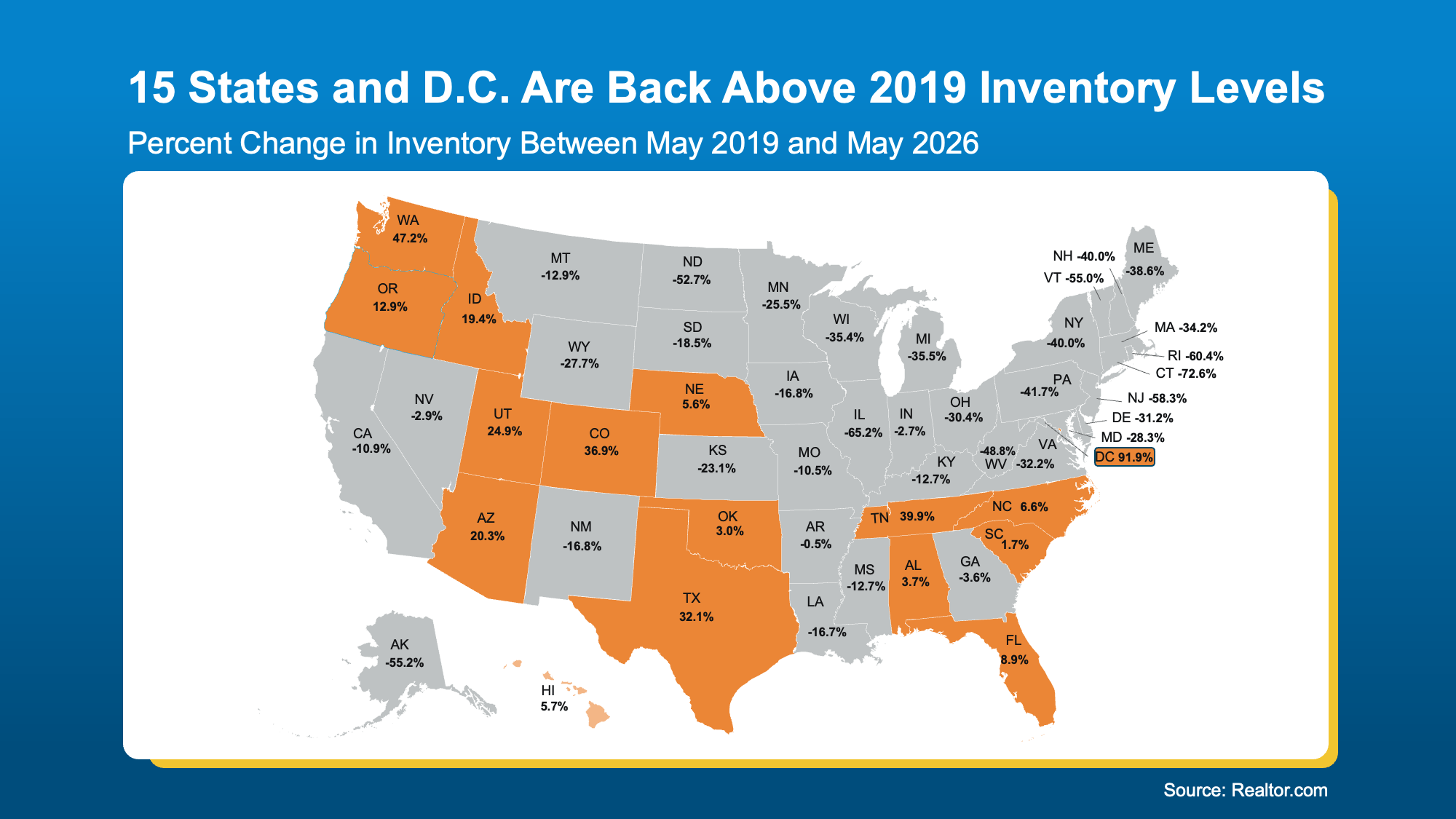
Several states have now reached—or even exceeded—the number of homes that were available before the pandemic.
That increase in supply has shifted negotiating power toward buyers.
Instead of rushing to submit multiple offers, buyers can take their time comparing homes, negotiating repairs, requesting seller concessions, or even waiting for price reductions.
As inventory rises, price growth naturally slows.
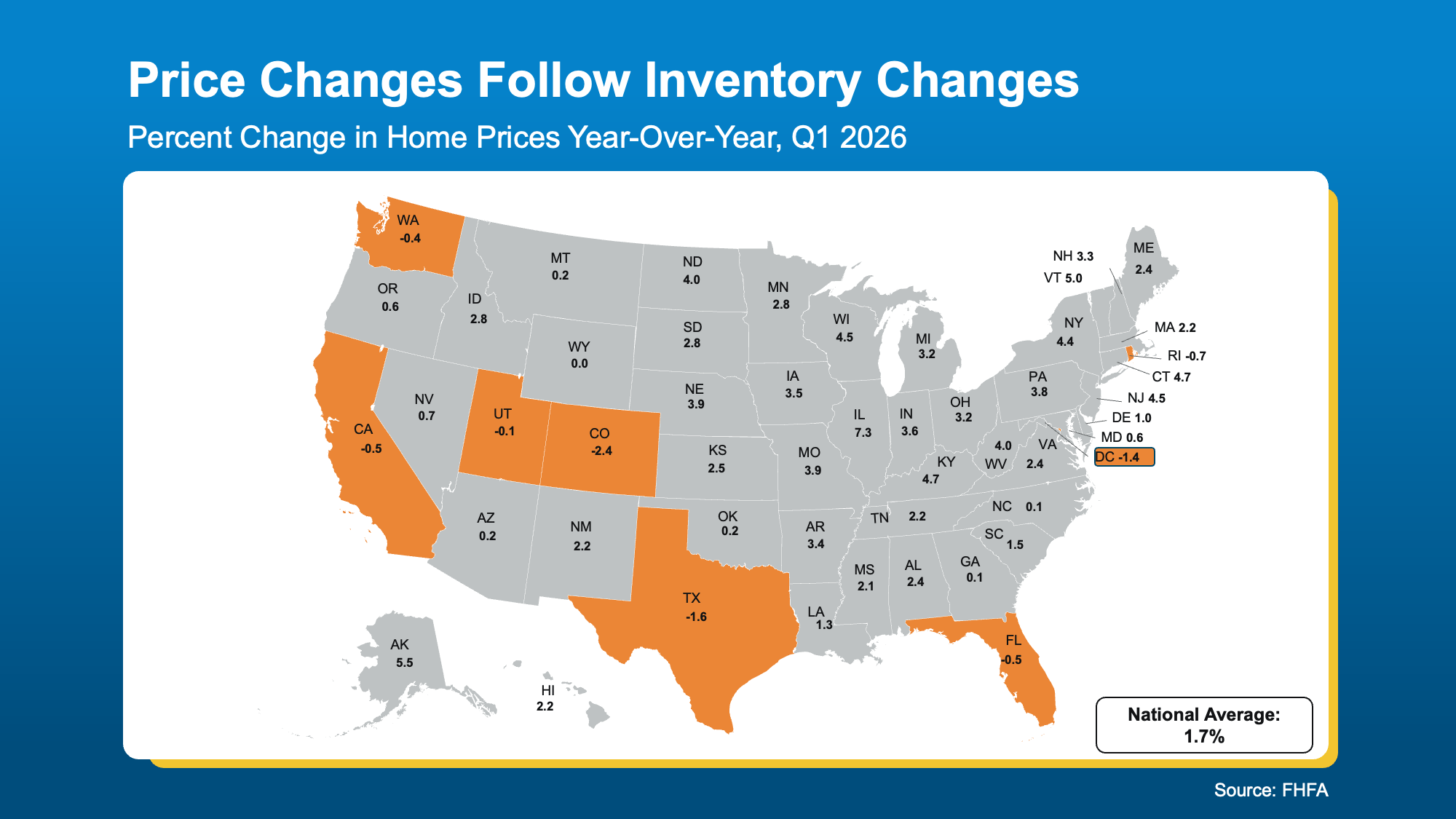
In some regions, home values have flattened. In others, they've experienced modest declines.
It's important to understand that these aren't signs of a nationwide housing crash. They're simply local markets adjusting to changing supply levels.
The Connection Between Inventory and Home Prices
Recent housing data reveals a remarkably consistent pattern.
Markets with inventory levels still below 2019 averages generally continue to record positive home price appreciation.
Meanwhile, markets where inventory has surpassed pre-pandemic levels are far more likely to experience slower appreciation or small price declines.
This isn't random.
It's the direct result of supply meeting—or even exceeding—buyer demand.
The relationship between inventory and pricing has become one of the clearest indicators of where local housing markets are headed.
Why National Housing Statistics Can Be Misleading
You may hear reports that the national housing market has experienced only modest price growth over the past year.
While technically accurate, national averages hide what's really happening beneath the surface.
Imagine combining the temperatures from Alaska and Arizona to describe the weather across the United States. The average wouldn't accurately represent either location.
Housing data works exactly the same way.
A national average blends together:
- Markets experiencing steady appreciation
- Markets with flat prices
- Markets seeing slight declines
The result doesn't fully represent what's happening in your neighborhood.
That's why buyers and sellers should pay much closer attention to local market conditions than national headlines.
What Today's Market Means for Home Buyers
If you're planning to purchase a home, your location matters more than ever.
In markets where inventory has grown significantly, buyers may enjoy several advantages:
- More homes to choose from
- Less competition from other buyers
- Greater negotiating power
- Increased opportunities for seller concessions
- More flexibility when making offers
Instead of feeling pressured to make immediate decisions, many buyers can now take time to find the right property at the right price.
However, buyers shopping in lower-inventory markets should still be prepared for competitive conditions.
Well-priced homes in desirable neighborhoods continue to attract strong interest, making preparation and financing just as important as ever.
What Home Sellers Need to Know
Selling a home in today's market requires a different strategy than it did just a few years ago.
During the peak of the seller's market, many homes sold quickly regardless of price.
That's no longer guaranteed.
In areas where inventory has increased, pricing your home correctly from the beginning has become essential.
An overpriced listing may sit on the market longer, causing buyers to wonder if something is wrong with the property. Eventually, price reductions may become necessary, often resulting in a lower final sale price than if the home had been competitively priced from day one.
On the other hand, sellers in low-inventory markets still benefit from limited competition. Even so, strategic pricing remains the key to attracting qualified buyers quickly and maximizing value.
Why Local Real Estate Expertise Matters More Than Ever
Today's housing market can't be understood through national news alone.
Every city—and sometimes every neighborhood—is responding differently to changing inventory levels.
That's why local market knowledge has become one of the most valuable resources for both buyers and sellers.
A knowledgeable real estate professional understands:
- Local inventory trends
- Buyer demand in specific neighborhoods
- Accurate pricing strategies
- Current negotiation conditions
- Seasonal market shifts
Rather than relying on broad national statistics, they can provide insights tailored to your specific market, helping you make confident decisions based on current local conditions.
The Bottom Line
The biggest factor influencing home prices today isn't interest rates, headlines, or market speculation—it's housing inventory.
Communities with limited homes for sale continue to see stable or rising prices, while areas with higher inventory are experiencing slower appreciation and, in some cases, modest price declines.
That's why there's no single answer to the question, "Are home prices going up or down?"
The answer depends entirely on where you're buying or selling.
Understanding your local market can make the difference between overpaying, underselling, or making a smart, informed move.
Whether you're entering the market as a buyer or preparing to sell your home, working with a local real estate expert who understands your area's unique trends can help you navigate today's changing market with confidence and build a strategy that fits your goals.
Recent Posts









GET MORE INFORMATION