Is It Still a Seller's Market in 2026? What Today's Housing Data Reveals

For several years, the housing market felt like a one-sided game. Sellers held the upper hand, homes received multiple offers within days, and buyers often found themselves paying well above asking price just to stay competitive. Waived inspections, bidding wars, and lightning-fast sales became the norm.
But the real estate landscape is changing.
As inventory levels gradually rise across many parts of the country, buyers are beginning to regain leverage. While the market isn't entirely balanced everywhere, the overwhelming seller dominance that defined recent years is starting to fade in many regions.
So, is it still a seller's market?
The answer depends on where you live, but the latest housing data paints a much more nuanced picture than it did just a few years ago.
Let's dive into what today's market trends mean for buyers, sellers, and anyone planning a move.
The Housing Market Is Becoming More Balanced
One of the biggest shifts happening in real estate today is the return of balance.
According to recent national housing data, the market is gradually moving toward conditions that are more favorable for buyers. Instead of sellers calling all the shots, both sides are beginning to have more negotiating power.
Think of the housing market as a pendulum. During the pandemic-era boom, it swung heavily toward sellers. Now, it's slowly moving back toward the middle.
This change is largely being driven by an increase in available homes for sale. As inventory grows, buyers gain more options, reducing the urgency and competition that once fueled aggressive bidding wars.
For many buyers, this is welcome news.
Instead of feeling pressured to make rushed decisions, they can take more time to evaluate properties, compare options, and negotiate favorable terms.
How Much Has the Market Changed?
The shift is more significant than many people realize.
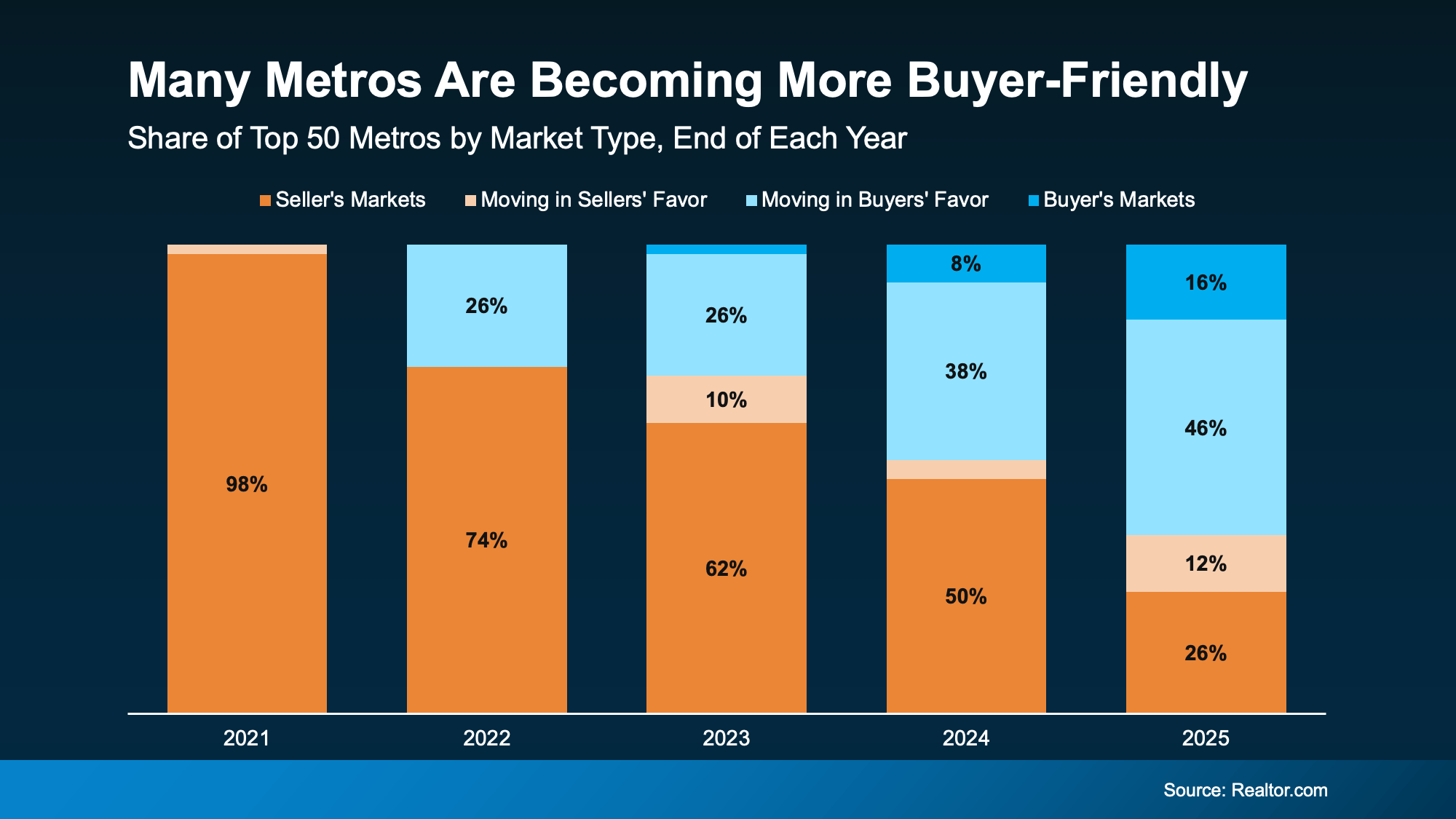
Back in 2021, nearly every major metropolitan area in the United States strongly favored sellers. Homes sold quickly, inventory was scarce, and buyers faced intense competition.
Fast forward to today, and the landscape looks dramatically different.
By the end of 2025, only about one-third of major metro markets still leaned heavily toward sellers. Many areas have transitioned into balanced markets, while others have begun favoring buyers.
That's a major transformation in just a few short years.
However, this doesn't mean we've entered a full-fledged buyer's market nationwide. Instead, we're seeing a market that offers more opportunities for both sides, depending on local conditions.
The days of assuming every listing will spark a bidding war are largely behind us in many areas.
Real Estate Is Local: Why Every Market Tells a Different Story
While national trends provide valuable insight, real estate has always been local.
What happens in one city may look completely different from what's happening a few hundred miles away.
That's why broad headlines can sometimes be misleading.
Some regions are clearly becoming more buyer-friendly, while others remain highly competitive and continue to favor sellers.
The primary factor behind these differences is the relationship between housing supply and buyer demand.
When there are more homes available than buyers actively shopping, buyers gain negotiating power.
When inventory remains limited and demand stays strong, sellers maintain the advantage.
Understanding this balance is crucial before making any real estate decision.
Why Sun Belt Markets Have Cooled
Many of the markets that experienced explosive growth during the pandemic are now seeing a noticeable slowdown.
Cities such as Austin, Tampa, and San Antonio experienced significant construction booms over the past several years.
Builders responded to high demand by developing new communities and increasing housing inventory.
As more homes entered the market, buyers suddenly had more choices.
And when buyers have options, they gain leverage.
This increased inventory has softened competition in many Sun Belt markets, leading to longer listing times, more price reductions, and greater negotiation opportunities for buyers.
For sellers in these areas, pricing strategy and presentation have become more important than ever.
Why the Northeast and Midwest Remain Competitive
While some regions are cooling, others continue to experience strong seller-friendly conditions.
Cities such as Rochester, Hartford, and Buffalo have not seen the same level of new construction as many Sun Belt markets.
As a result, housing inventory remains relatively tight.
When supply stays limited and demand remains steady, competition naturally increases.
Buyers in these markets may still encounter multiple-offer situations and limited housing choices.
This highlights one of the most important truths in real estate: local market conditions matter far more than national headlines.
What Buyers Should Do in a Competitive Seller's Market
If you're shopping for a home in an area that still favors sellers, preparation is everything.
The more prepared you are, the better your chances of securing the right property.
Get Pre-Approved Early
Mortgage pre-approval demonstrates that you're financially qualified and ready to move forward.
Sellers often prioritize buyers who already have financing in place because it reduces uncertainty.
Act Quickly on Desirable Listings
In competitive markets, hesitation can be costly.
If a property meets your needs and budget, be prepared to move fast when opportunities arise.
Strengthen Your Offer
Price isn't always the only factor sellers consider.
Flexible closing dates, larger earnest money deposits, or fewer contingencies can help make your offer more attractive.
Partner With a Knowledgeable Local Agent
An experienced real estate professional understands local trends and can help position your offer effectively in competitive situations.
What Sellers Should Do in a Buyer-Friendly Market
Selling a home becomes more challenging when buyers have plenty of options.
That doesn't mean you can't achieve a successful sale—it simply requires a different strategy.
Price Your Home Correctly From Day One
One of the biggest mistakes sellers make is overpricing.
An overpriced home often sits on the market longer, leading buyers to wonder what's wrong with the property.
Accurate pricing generates more interest and can lead to stronger offers.
Focus on First Impressions
Curb appeal matters.
Simple landscaping improvements, fresh paint, and a well-maintained exterior can significantly impact buyer perception.
Consider Home Staging
Buyers need to envision themselves living in the space.
Professional staging or thoughtful decluttering can help showcase your home's best features.
Be Open to Negotiation
In buyer-friendly markets, negotiations are becoming more common again.
Offering concessions such as closing cost assistance, repair credits, or home warranties can help attract serious buyers.
The Importance of Understanding Your Local Market
The biggest mistake buyers and sellers can make is assuming national trends automatically apply to their neighborhood.
A balanced market in one city may still feel highly competitive in another.
That's why local expertise is invaluable.
Market conditions can vary dramatically based on inventory levels, employment growth, population trends, affordability, and new construction activity.
Before making any move, it's essential to understand exactly what's happening in your local market—not just what's making headlines nationwide.
Bottom Line: The Housing Market Is No Longer One-Sided
The housing market of today looks very different from the frenzy of 2021.
Across many regions, rising inventory and shifting demand have created a healthier balance between buyers and sellers. While some areas still strongly favor sellers, others are giving buyers more opportunities than they've had in years.
The key takeaway?
There is no single answer to whether it's a seller's market or a buyer's market anymore.
Your local market holds the answer.
Whether you're buying your first home, upgrading to a larger property, or preparing to sell, understanding local conditions will help you make smarter decisions and create a strategy that works in today's evolving real estate landscape.
Curious about where your local market stands? Connecting with a trusted real estate professional can help you understand current trends, identify opportunities, and make your next move with confidence.
Recent Posts









GET MORE INFORMATION