Who Has the Upper Hand in Today’s Housing Market? It Depends on Where You Live

If you’re thinking about buying or selling a home right now, there’s one question that probably keeps coming up: Who has the upper hand—the buyer or the seller?
The answer isn’t as simple as it used to be.
Some homebuyers are finding more room to negotiate, while some homeowners are still receiving strong offers and getting close to—or even above—their asking price. So, which side has the advantage?
Here’s the surprising part: both buyers and sellers can have the upper hand at the same time.
How is that possible?
It all comes down to one thing: where you live.
The U.S. housing market is no longer moving as one giant machine. Instead, it’s becoming increasingly local. Conditions can vary dramatically from one city, county, or neighborhood to the next. That means the strategy that works for a buyer in one market may be completely wrong for someone buying just a few hours away.
So, before you make your next move, let’s look at what the latest housing market trends can tell us.
Months of Housing Supply: The Number That Reveals Market Leverage
Want a quick way to understand whether buyers or sellers have more negotiating power?
Look at months of housing supply.
This metric measures how long it would theoretically take to sell all the homes currently available if no additional properties entered the market, based on the current pace of sales.
Think of it like a grocery store.
If there are only a few loaves of bread left and plenty of customers waiting, the seller has the advantage. But if the shelves are packed and very few people are shopping, customers have more choices—and more negotiating power.
Housing works in much the same way.
Generally, the market can be viewed like this:
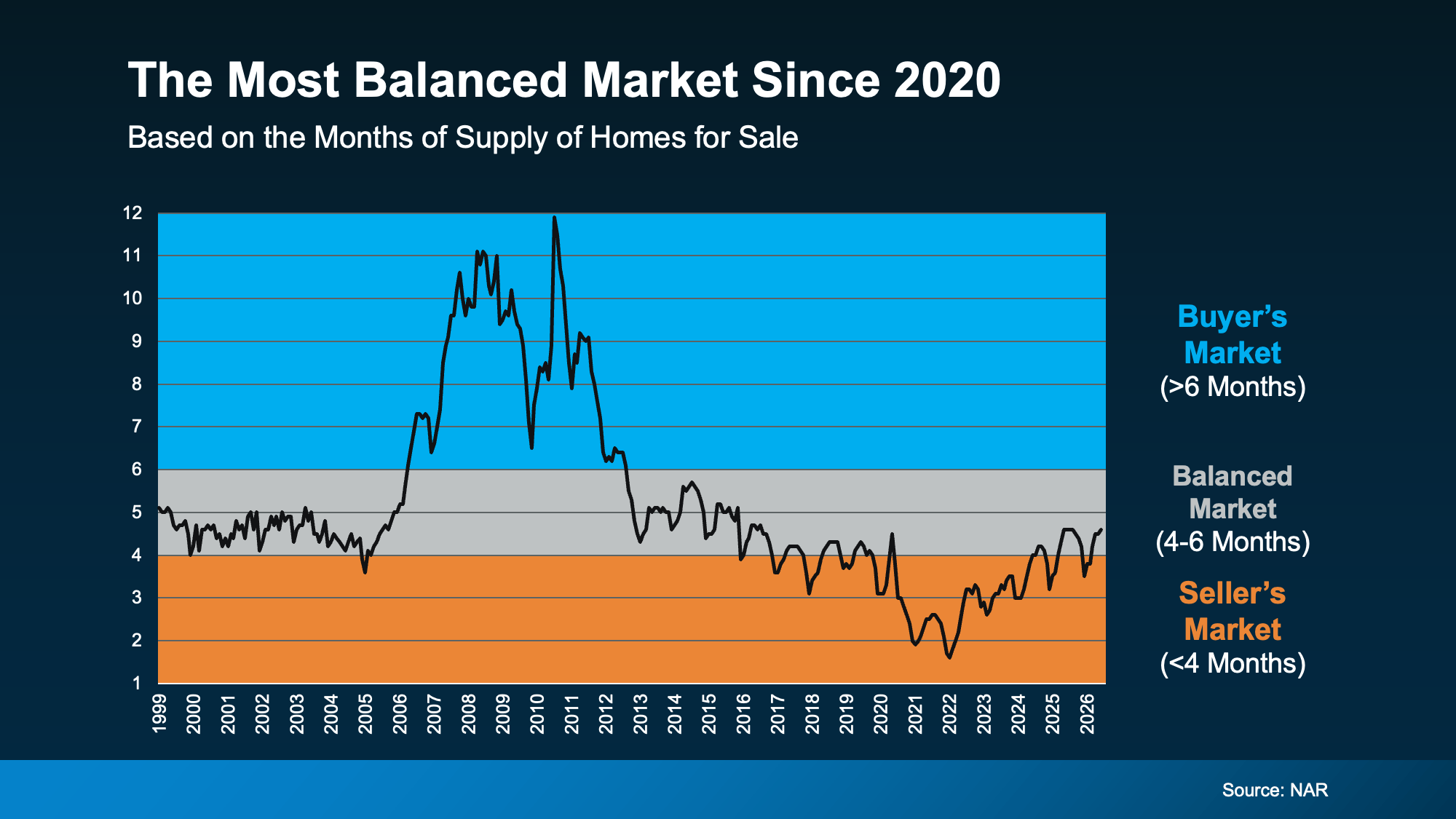
- Less than 4 months of supply: Sellers typically have the advantage.
- 4 to 6 months of supply: The market is generally considered balanced.
- More than 6 months of supply: Buyers usually have greater negotiating power.
According to recent National Association of Realtors data, the national existing-home inventory level has reached approximately 4.6 months of supply.
That places the overall U.S. housing market in balanced territory.
And that’s significant.
For years, homeowners enjoyed unusually strong negotiating power because there simply weren’t enough homes available to satisfy demand. Buyers competed against one another, prices climbed rapidly, and sellers often had the luxury of choosing among multiple offers.
Today, the playing field looks different.
It may not be a dramatic shift, but even a small change in inventory can have a meaningful impact on negotiations.
A Balanced Housing Market Doesn’t Mean Every Market Is Balanced
Here’s where things get interesting.
Hearing that the national housing market is “balanced” might make you think the same conditions exist everywhere.
They don’t.
The national housing market is really a collection of thousands of smaller markets. Your local market could look completely different from the national average.
That’s why national headlines can sometimes be misleading.
For example, one city might have an abundance of homes sitting on the market, giving buyers more time and negotiating power. In another city, limited inventory and strong demand could still push buyers into competitive situations.
And even within the same city, one neighborhood can behave differently from another.
A downtown condo market might be cooling while single-family homes in a nearby suburb continue to attract multiple offers.
So when someone says, “It’s a buyer’s market,” the natural question should be:
Where?
More Housing Markets Are Becoming Buyer-Friendly
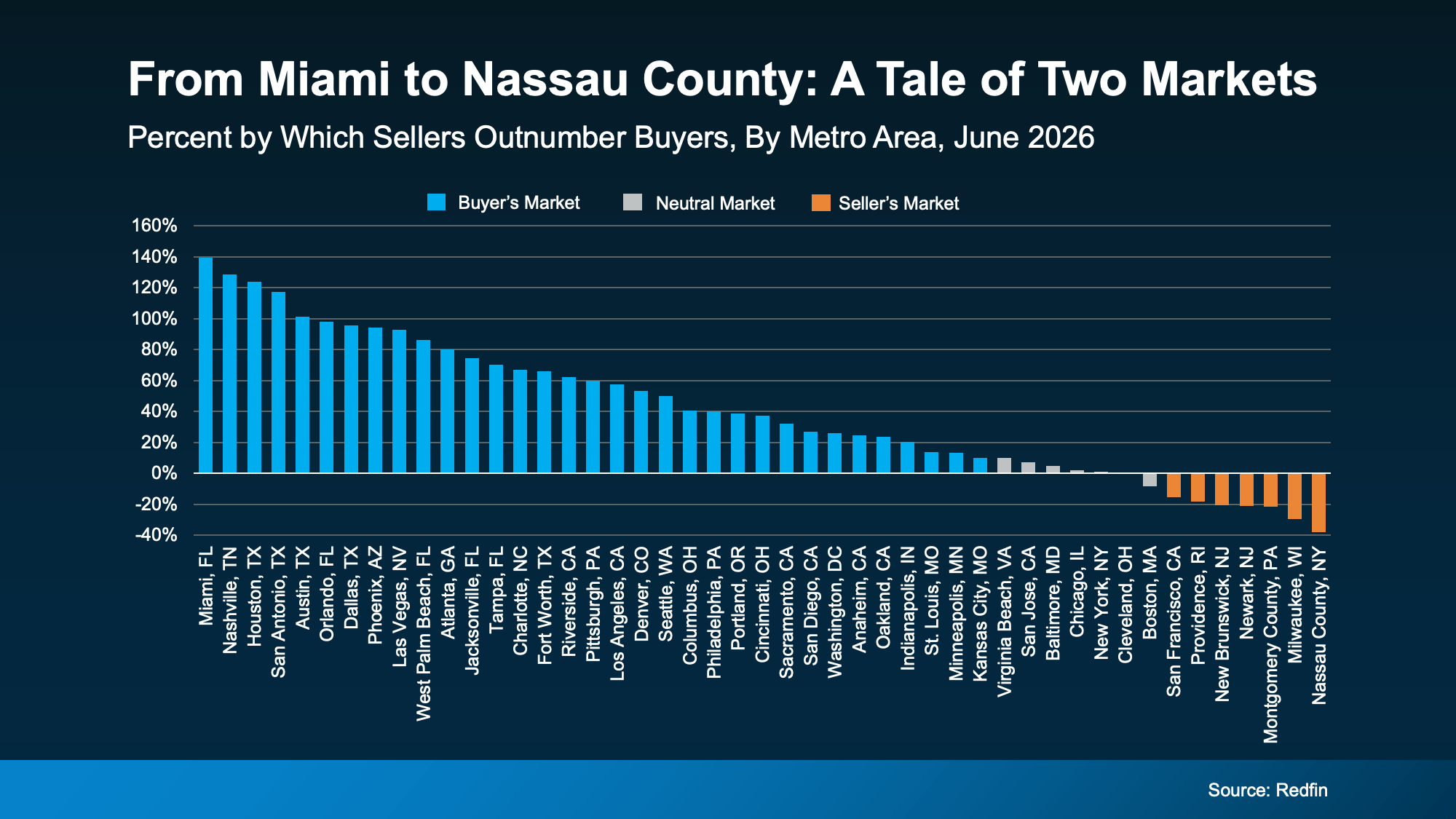
Recent market data shows that buyer-friendly conditions have become increasingly common across the country.
That’s good news if you’re shopping for a home.
More inventory generally means more choices. Instead of feeling pressured to make an offer immediately, buyers may have the opportunity to compare properties, negotiate terms, request repairs, or ask sellers for concessions.
That can make a huge difference.
Imagine walking into a store where there is only one item you want. You probably won’t have much bargaining power.
Now imagine five stores have the same item sitting on their shelves.
Suddenly, you have options.
The same principle applies to real estate.
When buyers have more homes to choose from, sellers may need to work harder to attract serious offers. That can create opportunities for buyers who know how to negotiate strategically.
However, buyer-friendly does not mean buyers automatically win.
There are still markets where sellers hold the advantage.
And that’s why understanding your local housing conditions matters so much.
What a Buyer-Friendly Market Means for Homebuyers
If you’re buying a home in an area where inventory is rising and demand has softened, you may have more leverage than buyers had just a few years ago.
That doesn’t mean you should make an unrealistic offer.
Instead, it means you may have more room to negotiate.
Depending on local conditions, buyers could potentially negotiate over:
- Purchase price
- Closing costs
- Seller concessions
- Repairs and maintenance
- Home warranties
- Closing dates
- Financing-related expenses
The important word here is potentially.
Every property is different.
A home that has been sitting on the market for 90 days may present a completely different negotiating opportunity than a property that received multiple offers within 48 hours.
That’s why buyers should look beyond the listing price.
How long has the home been available? Have there been price reductions? Are similar homes selling quickly? How many competing properties are available?
Those details can tell you much more about your negotiating position.
What a Seller-Friendly Market Means for Homeowners
On the other hand, sellers in competitive markets may still have plenty of leverage.
If inventory is limited and buyer demand remains strong, desirable homes can attract significant attention.
That creates an entirely different strategy.
Instead of automatically accepting the first offer, sellers may be able to compare multiple offers and negotiate favorable terms.
But there’s a catch.
Even in a seller-friendly market, pricing the home correctly still matters.
Overpricing can cause a property to sit on the market longer, which can weaken its appeal and eventually force a price reduction.
The goal isn’t simply to ask for the highest possible price.
The goal is to position the home so that buyers see its value and feel motivated to act.
That requires understanding comparable sales, current inventory, buyer demand, and neighborhood-specific trends.
The Biggest Housing Market Mistake You Can Make
The biggest mistake you can make in today’s real estate market is assuming you already know what kind of market you’re in.
It’s tempting to rely on national headlines.
You might hear that home prices are rising and assume sellers have all the power. Or you might hear that inventory is increasing and assume buyers can negotiate heavily.
Neither assumption is necessarily correct.
Real estate is local.
A buyer could receive thousands of dollars in seller concessions in one market while another buyer across the country is competing against several other offers.
One homeowner may need to adjust their asking price to attract buyers.
Another may have multiple interested buyers willing to compete for the property.
Same country.
Same year.
Completely different real estate experiences.
Why Local Real Estate Expertise Matters More Than Ever
This is where working with an experienced local real estate professional can make a real difference.
A knowledgeable agent can help you interpret the numbers that matter in your specific market—not just national statistics.
For buyers, that could mean identifying homes with negotiating potential, understanding recent comparable sales, and developing an offer strategy based on actual local competition.
For sellers, it could mean determining the right listing price, evaluating competing properties, and understanding what buyers are currently demanding.
Think of it like using a GPS.
You can know the general direction you need to travel, but local road conditions, construction, traffic, and unexpected detours can completely change the best route.
The same is true with real estate.
National housing data gives you the map.
Local market data tells you which road to take.
The Bottom Line: There Isn’t One Winner in Today’s Housing Market
So, who has the upper hand in today’s housing market?
There isn’t one universal answer.
The market has become more balanced nationally, with more areas showing buyer-friendly conditions than in recent years. But sellers still have an advantage in certain locations, particularly where inventory remains limited and demand is strong.
That means your neighborhood matters more than the national headline.
If you’re buying, don’t assume you have negotiating power simply because inventory is rising.
If you’re selling, don’t assume you can command top dollar simply because home prices are still increasing nationally.
Instead, start with the numbers in your own backyard.
How much inventory is available? How quickly are homes selling? Are prices rising or falling? Are sellers offering concessions? How competitive are buyers right now?
Those answers will help determine who really has the leverage.
The housing market isn’t a one-size-fits-all game anymore. It’s more like a patchwork quilt—every market has its own pattern.
So, if you’re wondering whether buyers or sellers have the upper hand in your area, don’t rely on a national headline.
Let’s look at the local numbers together and build a strategy around what’s actually happening in your market.
Recent Posts










GET MORE INFORMATION