The Mortgage Rate You See Online May Not Be the Rate You Actually Get

Mortgage rates have been making headlines again, with recent reports showing rates climbing to their highest level since January 2025. For prospective homebuyers, that kind of news can be enough to hit the brakes.
After all, if rates are rising, why rush into buying a home?
But there is an important detail that often gets lost in the headlines: the mortgage rate you see online is not necessarily the rate you will receive.
Think of advertised mortgage rates like the price you see on a menu. It gives you a useful starting point, but your actual order may depend on what you choose, how you pay, and the terms involved. Mortgage rates work in much the same way.
The rate advertised online is a general market figure. Your actual mortgage rate depends on your financial profile, the property you're buying, the loan program you choose, and several other factors.
So before you decide that today's mortgage rates are too high, it may be worth finding out what your rate could actually be.
Why Mortgage Rates Vary From One Buyer to Another
Mortgage rates change frequently. They can move based on broader economic conditions, financial markets, inflation expectations, and other factors.
But market movement is only part of the story.
The rate you personally qualify for can be different from the number appearing in a news article, social media post, or mortgage-rate advertisement. That's because lenders evaluate your individual financial situation when determining the terms of your loan.
Two buyers could purchase homes at the same time and borrow similar amounts but receive different mortgage rates.
Why? Their financial profiles may not be identical.
That's why looking at a national or average mortgage rate can be useful for understanding the market, but it cannot tell you exactly what you'll pay.
What Determines Your Mortgage Interest Rate?
Your actual mortgage rate is influenced by several factors. Understanding them can help you have a more productive conversation with a lender and give you a clearer picture of your home-buying options.
Credit Score and Credit History
Your credit score is one of the factors lenders may consider when evaluating your mortgage application.
Your credit history can show how consistently you've managed borrowed money. Lenders may look at things such as your payment history, credit utilization, and the length of your credit history.
For example, a borrower with a strong credit profile may qualify for different loan terms than someone with a lower credit score.
That doesn't mean your credit score determines everything. It is simply one piece of a much larger financial puzzle.
If you're thinking about buying a home, it's worth understanding your credit position before you start shopping. After all, knowing where you stand gives you more time to address potential issues.
Debt-to-Income Ratio
Another important consideration is your debt-to-income ratio, commonly called DTI.
Your DTI compares your monthly debt payments with your gross monthly income. In simple terms, it helps lenders understand how much of your income is already committed to debt.
Imagine your income as a bucket of water. Every monthly debt payment takes some water out of that bucket. The more obligations you have, the less room may remain for a new mortgage payment.
A higher DTI can affect the loan options available to you and, depending on the circumstances, may affect your mortgage terms.
That's why paying attention to existing debts can be an important part of preparing to buy a home.
Down Payment and Loan-to-Value Ratio
Your down payment can also influence your mortgage.
The down payment is the portion of the home's purchase price you pay upfront. The remainder is generally financed through your mortgage.
This connects to another important measurement: loan-to-value ratio, or LTV.
LTV represents the size of your mortgage compared with the home's value or purchase price, depending on the loan and circumstances.
Generally speaking, a larger down payment means you're borrowing a smaller percentage of the home's value. However, the relationship between your down payment, LTV, mortgage insurance, and loan pricing can vary depending on the loan program.
So don't assume that every buyer needs to follow the same down-payment strategy.
Loan Type and Mortgage Term
Not all mortgages are created equal.
Different loan programs can have different requirements, rates, fees, and terms. The length of the loan can matter too.
For example, a buyer considering one type of mortgage may see a different rate than someone choosing another loan product.
This is one reason working with a loan professional can be helpful. Instead of focusing on one number, you can compare the loan options available based on your circumstances.
Mortgage Rate Buydowns Can Change the Picture
There's another factor that homebuyers sometimes overlook: mortgage rate buydowns.
A rate buydown can allow a borrower to obtain a lower mortgage rate by paying an upfront cost. Depending on the transaction, a seller, builder, or another party may also contribute toward the cost as an incentive.
Why does that matter?
Because the interest rate isn't the only number that determines whether a mortgage makes sense for you. You also need to consider the upfront cost, monthly payment, and how long you expect to keep the loan or home.
A lower rate may sound attractive, but it doesn't automatically mean the overall deal is better for every buyer.
It's about looking at the entire picture rather than chasing one number.
Seller Concessions May Help With Your Upfront Costs
Homebuyers should also understand seller concessions.
Depending on the loan program and applicable guidelines, a seller may be able to contribute toward certain buyer closing costs.
That can potentially free up some of your available cash.
For example, if the seller contributes toward eligible closing expenses, you may have more money available for other priorities, such as your down payment or other financial needs.
Of course, the rules and limits can vary by loan type and situation. That's why it's important to discuss the details with your lender rather than assuming every concession is available to every buyer.
Still, seller concessions can be an important part of the negotiation and financing conversation.
Pre-Approval Can Give You a More Personal Picture
If online mortgage rates have you wondering whether buying a home is realistic, your next step doesn't have to be guessing.
Consider talking with a lender.
A lender can review your financial situation, discuss available loan programs, and help you understand what your potential mortgage could look like.
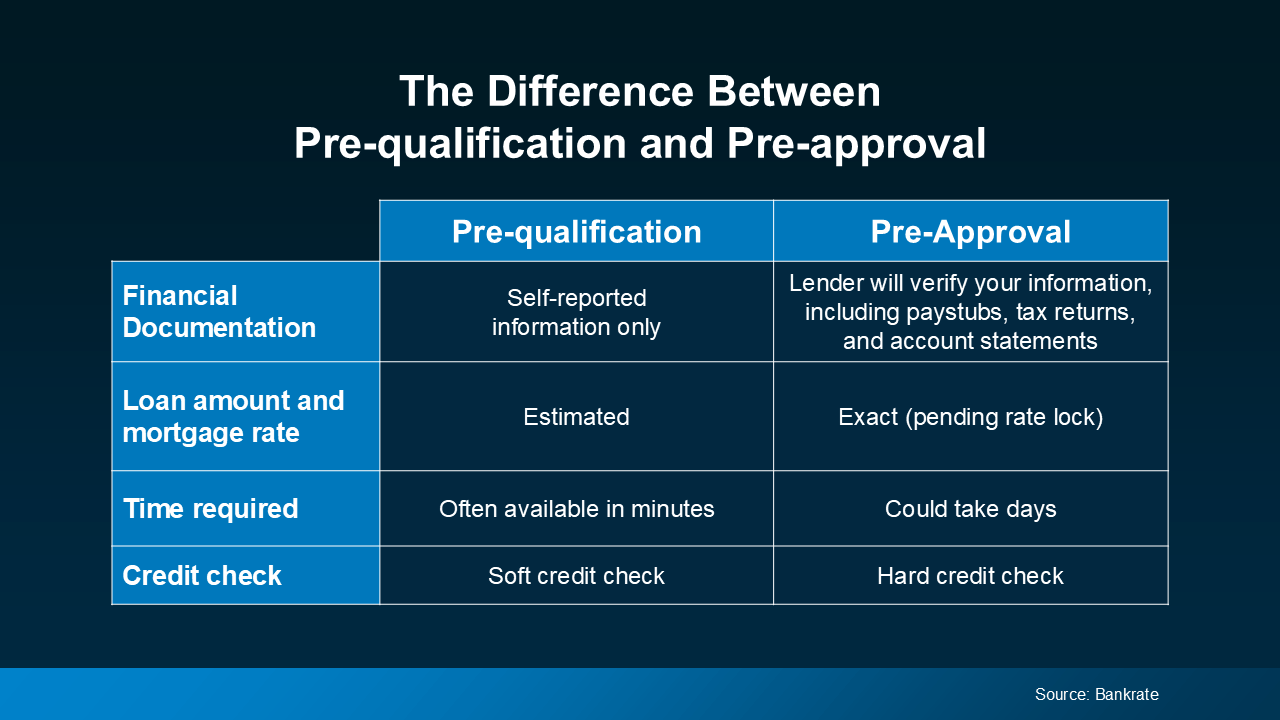
You may hear the terms pre-qualification and pre-approval used during this process. Although they sound similar, they aren't necessarily the same.
What Is Mortgage Pre-Qualification?
Pre-qualification generally provides an estimate of how much you may be able to borrow. It can be based largely on information you provide to the lender.
Think of it as an early snapshot rather than the complete picture.
It can help you start thinking about your potential budget, but it may not provide the same level of certainty as a pre-approval.
What Is Mortgage Pre-Approval?
A pre-approval typically involves a more detailed review of your financial information and supporting documentation.
Because the lender has more verified information, a pre-approval can give you a clearer idea of your potential borrowing options.
It can also help you approach the home-buying process with a better understanding of your budget.
Neither process guarantees that you'll ultimately receive a mortgage or a particular interest rate, but pre-approval generally gives you a more detailed picture of your financing position.
What Should You Ask Your Mortgage Lender?
Before you have that conversation, prepare a few questions.
Don't be afraid to ask about the details. A mortgage is a major financial commitment, and understanding the numbers matters.
Here are some questions worth bringing to the table:
- What mortgage rate might I qualify for based on my current financial situation?
- What loan programs am I eligible for?
- How would my payment change if mortgage rates move higher or lower?
- Would waiting three, six, or twelve months significantly change my options?
- Are there potential tax considerations I should discuss with a qualified tax professional?
- How much would I need for my down payment and closing costs?
- Could seller concessions or a rate buydown affect my financing?
- What would buying now versus waiting mean for my long-term finances?
These questions can turn a vague conversation about "mortgage rates" into a much more useful discussion about your mortgage rate.
Should You Buy Now or Wait for Lower Mortgage Rates?
This is where things become personal.
There isn't one universal answer for every homebuyer.
Waiting could make sense for one person, while another buyer may decide that purchasing sooner fits their finances and goals. Mortgage rates can change, but so can home prices, inventory, household finances, and other costs associated with buying.
The key is not to make a major financial decision based solely on a headline.
Instead, look at the complete picture.
What can you comfortably afford? What loan options are available to you? How much cash do you need upfront? How would different interest rates affect your monthly payment? And how does buying now fit into your longer-term financial plans?
Once you have those answers, you're no longer reacting to a number on a screen. You're making a decision based on information specific to your situation.
The Bottom Line on Today's Mortgage Rates
Mortgage-rate headlines can provide useful context, but they don't tell the entire story.
The rate you see online is often a broad market figure, while your actual mortgage rate can depend on factors such as your credit profile, debt-to-income ratio, down payment, loan type, loan term, and other circumstances.
That's why you shouldn't automatically assume that the rate in a headline is the rate you'll receive.
Before you rule out buying a home because of what you saw online, talk with a qualified lender and find out what your options actually look like.
You may discover that your situation is different from the headline.
And even if you're not ready to buy today, getting informed can still be valuable. Knowing your potential rate, understanding your budget, and learning what you need to improve can help you prepare for the road ahead.
Recent Posts









GET MORE INFORMATION