Two Smart Moves That Could Help You Buy Your First Home Sooner
For many first-time homebuyers, owning a home can feel like a goal that keeps moving further away. You save, you watch home prices, you pay rent, and somehow the finish line still seems miles away.
But what if you don't have to wait as long as you think?
Buying your first home isn't only about saving a huge down payment or waiting until you can afford a typical home in your area. A few strategic choices can make a meaningful difference. In particular, choosing a more affordable starter home and considering a down payment below 20% may help shorten the path to homeownership.
Of course, the right decision depends on your income, savings, credit, monthly expenses, and local housing market. Still, understanding the numbers can change the way you look at buying a home.
How Long Does It Really Take To Buy a First Home?
Before looking at ways to speed things up, it helps to understand what "breaking even" means.
In simple terms, the renting vs. buying break-even point is when the total financial cost of owning a home becomes roughly comparable to what you would have spent renting during the same period. After that point, owning may become financially more attractive than continuing to rent.
That's why buying a home isn't simply about asking, "Can I afford the mortgage?"
A better question is: How long do I plan to stay in the home?
If you're likely to move again soon, buying may not give you enough time to recover the upfront costs of purchasing. But if you're planning to stay for several years, homeownership can have more time to work in your favor.
According to the figures in the original analysis, a typical buyer using a 20% down payment could spend about 8.5 years saving for the down payment, followed by another 6.2 years before reaching the estimated rent-versus-buy break-even point.
That's almost 15 years.
And let's be honest: when you're trying to buy your first home, nearly 15 years can sound less like a plan and more like an eternity.
However, that timeline isn't a universal rule. It depends on assumptions about home prices, down payments, rents, income, and the local housing market. Change those assumptions, and the timeline can change too.
That's where the first major strategy comes in.
1. Consider Buying a Starter Home
Your first home doesn't have to be your forever home.
A starter home is generally a property priced toward the lower end of the market in a particular area. It might be a smaller single-family house, condominium, townhouse, or an older property that needs fewer luxury features.
Think of it as your first step onto the property ladder rather than the final destination.
Why does that matter?
Because a less expensive home usually means a smaller amount needed for the down payment. It can also mean a lower mortgage balance compared with buying a more expensive property.
For example, imagine you're looking at two homes. One costs $400,000, while another suitable starter home costs $280,000. Even if both require the same percentage down payment, the actual amount you need to save is dramatically different.
At 20%, a $400,000 home requires an $80,000 down payment.
A $280,000 home requires $56,000.
That's a $24,000 difference before you even consider closing costs and other expenses.
The lower purchase price can make the goal feel much more reachable.
Starter Homes Can Shorten the Homebuying Timeline
The original Zillow-based analysis estimates that buying a starter home could reduce the combined saving-and-break-even timeline to around 7.2 years, compared with nearly 15 years under the example involving a mid-priced home and a 20% down payment.
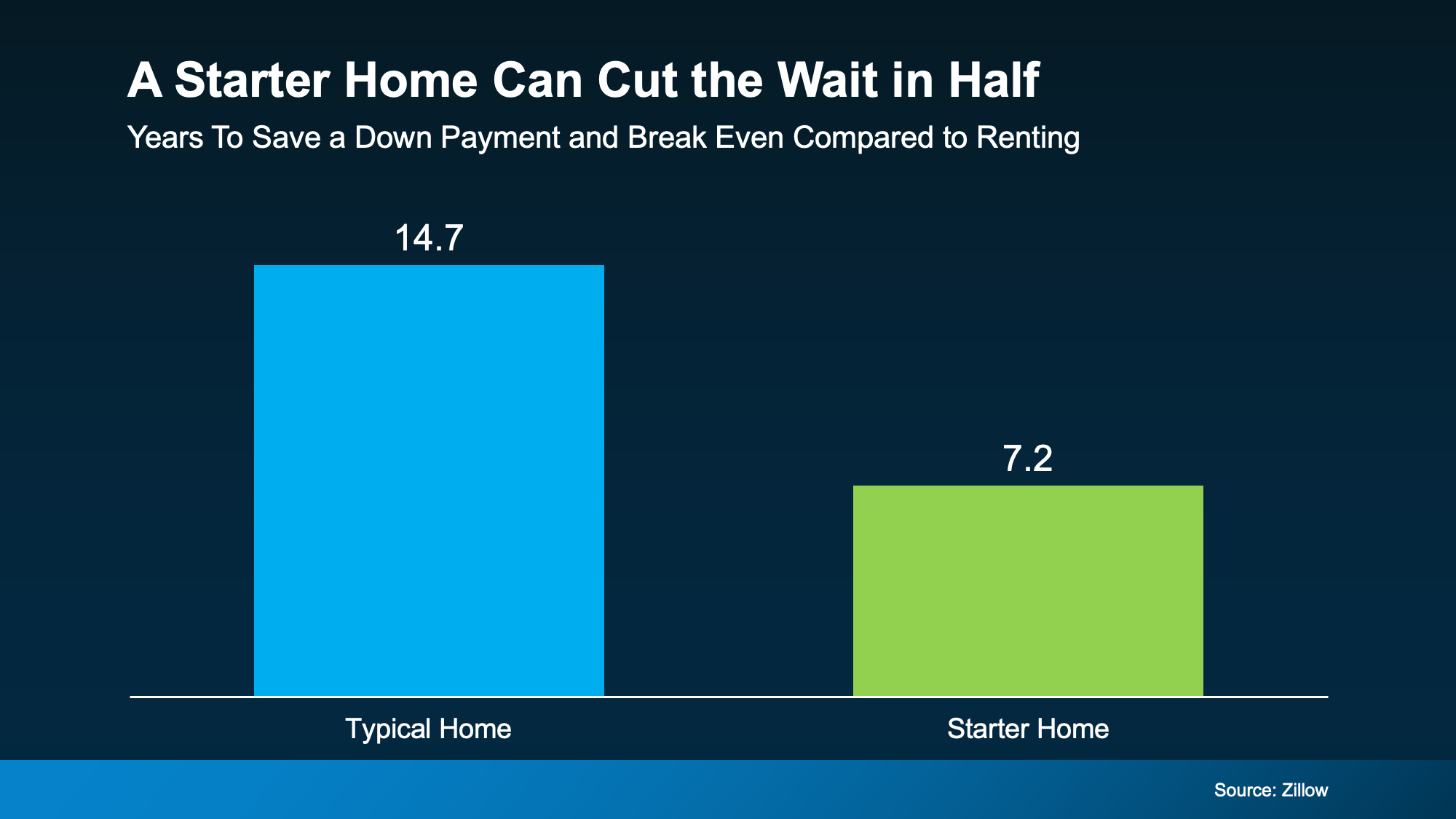
That estimate breaks down into approximately 4.6 years to save and 2.6 years to reach the break-even point.
That's a substantial difference.
It doesn't mean every buyer will experience the same timeline. Housing markets vary considerably, and your personal financial situation matters. But the basic idea is powerful: you don't necessarily need to buy the most expensive home you can qualify for.
In fact, buying below your maximum budget may give you more breathing room.
A smaller mortgage could leave more room in your monthly budget for emergency savings, repairs, investments, travel, or other financial goals.
Your first home doesn't have to prove anything. It simply needs to work for your life.
2. You May Not Need a 20% Down Payment
Here's another assumption worth challenging: you always need 20% down to buy a home.
You don't.
A 20% down payment can certainly have advantages, but it isn't a universal requirement for first-time buyers.
The original article cites National Association of Realtors data showing that the median down payment among first-time buyers is around 10%, significantly below 20%.
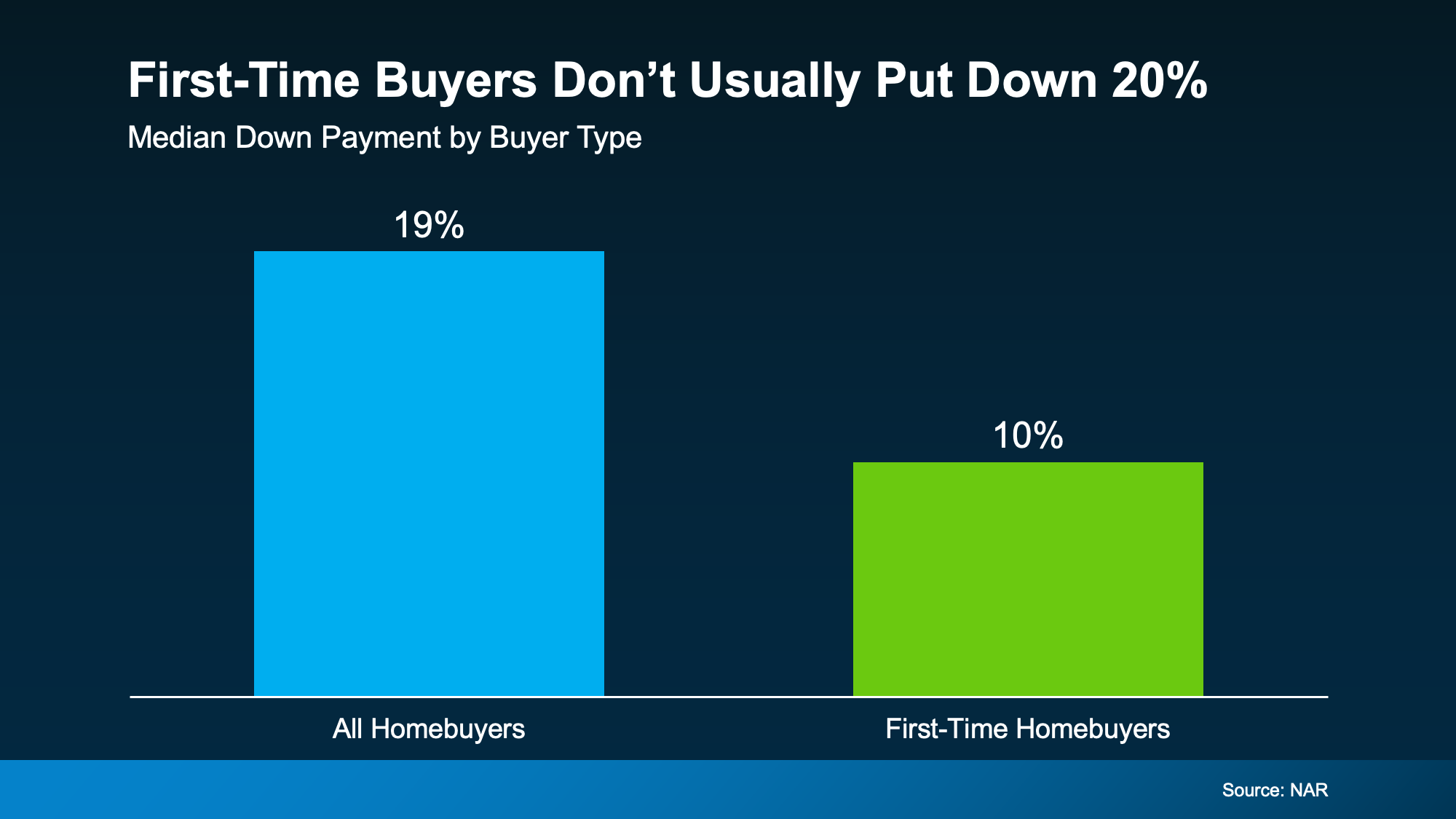
Depending on the loan program and your eligibility, some conventional mortgages may allow down payments as low as 3%. FHA loans can require as little as 3.5% for eligible borrowers. Certain veterans and qualified buyers in some rural areas may also have access to programs that require no down payment.
That doesn't mean putting less money down is automatically the best choice.
A smaller down payment can increase the amount you borrow. It may also lead to mortgage insurance, higher monthly payments, or greater overall borrowing costs. That's why you need to look beyond the amount required upfront.
The real question is:
What payment can you comfortably afford every month?
Saving for years just to reach a specific down payment percentage may not always be necessary if another financing option fits your circumstances.
Down Payment Assistance Could Help With Upfront Costs
Saving for a down payment isn't the only challenge. Buyers also need to consider closing costs, inspections, moving expenses, and other costs associated with purchasing a home.
Fortunately, there are programs designed to help eligible buyers manage some of these upfront expenses.
The original analysis references Down Payment Resource, which identifies thousands of homebuyer assistance programs across the country. Some buyers may even be able to combine multiple eligible sources of assistance.
This approach is sometimes called layering assistance.
Think of it like putting together a puzzle. One program might help with the down payment, another could assist with closing costs, and your own savings could cover the remaining amount.
Eligibility varies, so you'll need to check the specific requirements for each program. Income limits, location, property type, credit requirements, and other conditions can apply.
Still, it's worth investigating before assuming you have to save every dollar on your own.
Combine Both Strategies for a Faster Path
Now consider what happens when you combine the two approaches.
Instead of saving for a large down payment on a mid-priced home, you could potentially:
- Look for a reasonably priced starter home.
- Choose a loan that allows a smaller down payment if you qualify.
- Research down payment assistance programs.
- Keep enough cash available for emergencies and homeownership expenses.
- Compare the total monthly cost rather than focusing only on the purchase price.
This doesn't create a shortcut where none exists. Buying a home still requires careful planning.
But it can change the size of the mountain you're trying to climb.
Imagine you're carrying a heavy backpack up a hill. You could keep walking while carrying everything inside it. Or you could remove the unnecessary weight.
Buying a starter home and exploring financing options can be similar. You're not avoiding the climb. You're making the climb more manageable.
Don't Forget the True Cost of Homeownership
Before making an offer, look beyond the listing price.
Your monthly housing cost may include more than principal and interest. Depending on the property and loan, you may also have property taxes, homeowners insurance, mortgage insurance, homeowners association fees, maintenance, and utilities.
And homes eventually need repairs.
A roof doesn't care that you're a first-time buyer. Neither does a broken water heater.
That's why keeping an emergency fund is important even after you've saved enough to purchase the property.
A home should give you stability—not leave you financially stretched every month.
It's also important to compare buying with renting based on your actual circumstances. If your job, family situation, or plans may require you to move soon, renting could still make sense for you.
Your First Home Doesn't Have To Be Your Dream Home
There's nothing wrong with wanting a beautiful home with everything on your wish list.
But your first property doesn't have to check every box.
Maybe the kitchen is smaller than you'd like. Maybe there's no giant backyard. Maybe the neighborhood isn't the one you imagined when you first pictured owning a home.
That's okay.
A starter home can be a stepping stone. Over time, your financial situation may change, your home may build equity, and your housing needs may evolve.
The goal isn't necessarily to buy the perfect house on day one.
The goal is to make a purchase that fits your finances and your life.
The Bottom Line
For first-time buyers, homeownership can sometimes feel years away. But the timeline isn't necessarily fixed.
Two decisions can potentially bring the goal closer: considering a starter home instead of a mid-priced property and exploring down payment options below 20%.
When combined with available assistance programs and careful budgeting, these strategies may reduce the amount you need to save before buying.
The key is to look at the entire picture—not just the down payment.
How much can you comfortably afford each month? How long do you expect to stay? What assistance programs might you qualify for? And what type of home actually meets your needs?
Recent Posts




GET MORE INFORMATION