Why Fall 2026 Could Be a Smart Time to Buy a Home

If you’ve been waiting for the “right” moment to buy a home, you may be watching the wrong calendar.
Mortgage rates naturally get much of the attention. After all, the rate you secure can affect your monthly payment and the overall cost of your loan. But rates aren’t the only factor that matters when you’re deciding whether to make a move.
There’s another seasonal shift worth paying attention to: fall.
As summer fades and the housing market enters a traditionally slower period, buyers can sometimes gain advantages that are harder to find during the busy spring and summer months. More homes may be available, asking prices can become more flexible, and sellers may have stronger reasons to negotiate.
So, could fall be an overlooked opportunity for homebuyers?
It just might be.
Fall Can Bring More Homes to the Market
One of the biggest challenges buyers have faced in recent years is simply finding enough homes to choose from.
Think about shopping for a house like shopping for a pair of shoes. If a store only has three pairs in your size, you may have to settle for the color you don't really want, the style that's only “okay,” or a price that's higher than you'd prefer.
More inventory changes that equation.
According to seasonal housing trends, September through November typically offer buyers a larger selection of homes for sale than other times of the year. That means your search may become less about finding anything available and more about finding something that actually fits your lifestyle, priorities, and budget.
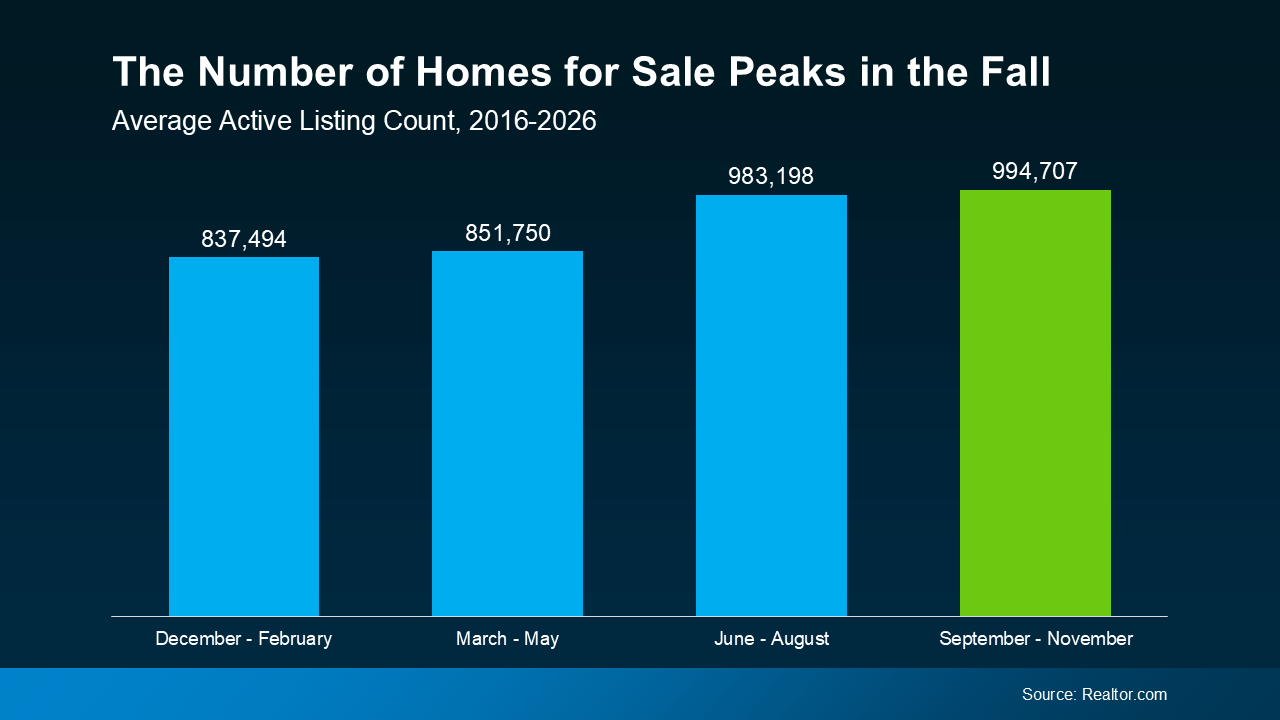
Why does inventory often build during this part of the year?
Some homes listed during the spring and summer haven't sold yet. Meanwhile, new properties continue to enter the market. As these listings accumulate, buyers may have a larger pool of options to consider.
That can be especially helpful if you're looking for something specific—a particular neighborhood, a certain number of bedrooms, a home office, a larger yard, or a property that doesn't need extensive renovations.
More inventory can mean fewer compromises.
Instead of asking, “Can I make this house work?” you may have more opportunities to ask, “Is this actually the right house for me?”
Seasonal Home Prices May Work More in a Buyer's Favor
More choices are helpful, but inventory alone doesn't guarantee a great deal.
If sellers are still demanding peak-season prices, having additional homes to browse doesn't necessarily make buying more affordable. That's where another potential fall advantage comes into play: seasonal pricing patterns.
The housing market tends to be more active during the spring and summer. Families often want to move during warmer months, buyers are more active, and sellers know there's typically stronger demand.
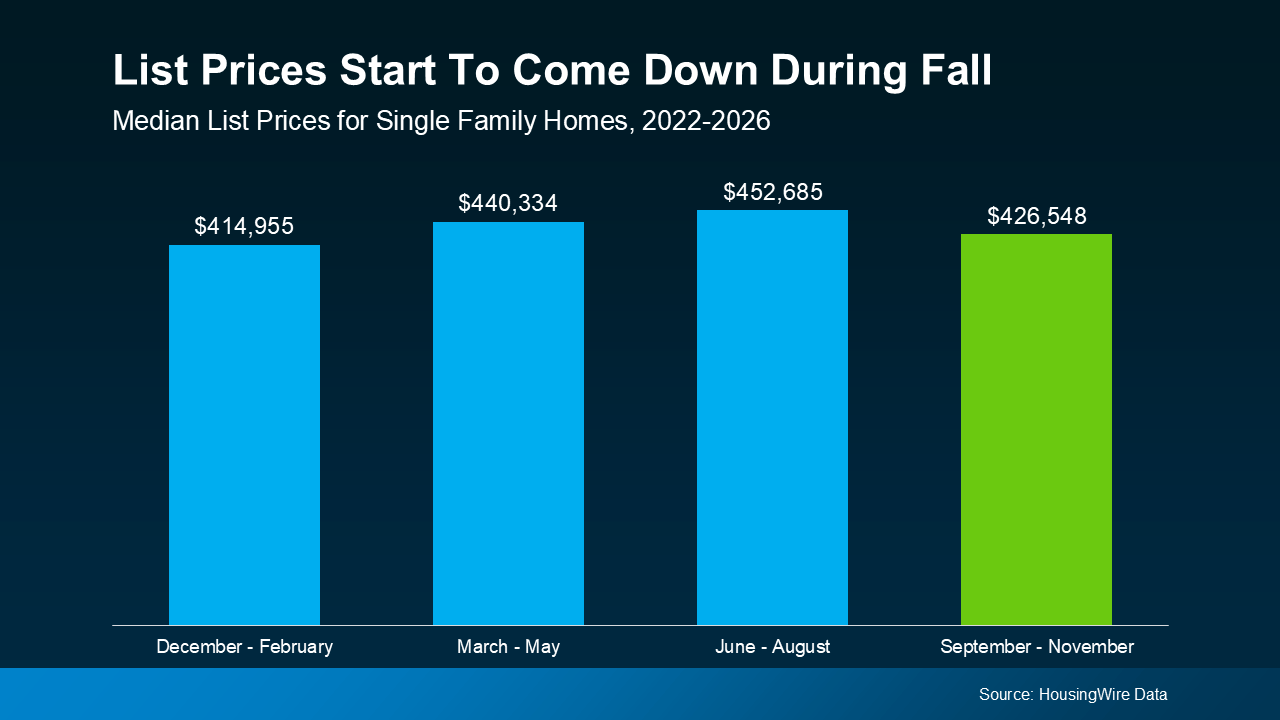
That can create a more competitive environment.
By fall, however, buyer activity often begins to cool. The urgency of the summer market fades, and some sellers become more willing to adjust their expectations.
This doesn't mean every home suddenly becomes inexpensive. Real estate doesn't work like a clearance rack.
Instead, the shift can create more realistic pricing and greater opportunities for buyers to negotiate.
For someone who has been priced out or frustrated by intense competition, that difference can matter.
Fall Buyers May Have More Negotiating Power
Here's where things get particularly interesting.
Buying a home isn't only about the listing price. The terms of the transaction matter, too.
A seller might agree to reduce the price, contribute toward closing costs, make certain repairs, offer credits, or become more flexible about the timeline. Every situation is different, but a slower market can give buyers more room to have those conversations.
Why?
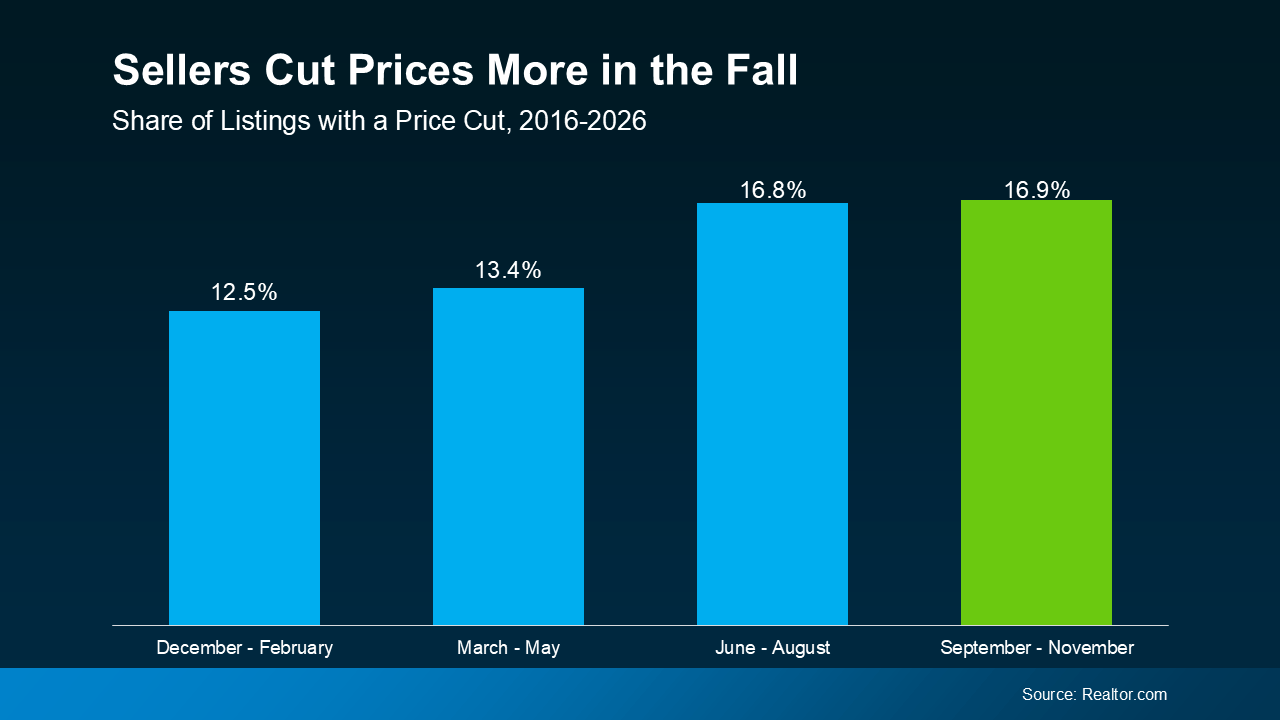
Because sellers who haven't received an acceptable offer by fall may have more motivation to get the transaction completed.
Some may have already purchased another property. Others may be relocating for work, downsizing, moving closer to family, or simply growing tired of having their home sit on the market.
And then there's the calendar.
As the holidays approach, sellers who have been listed for weeks or months may become increasingly interested in getting a deal done rather than carrying the property into another season.
That can create an opening for a prepared buyer.
Less Competition Can Make a Big Difference
Another advantage of buying in the fall is that you may encounter less competition from other buyers.
Spring and summer can feel like a race. A desirable home may attract multiple interested buyers, and competition can push people to make decisions quickly.
That environment can be stressful.
You might find yourself wondering whether you should offer above asking price, waive certain contingencies, or make an aggressive offer simply to avoid losing the property.
Fall can sometimes feel different.
With fewer buyers actively searching, you may have more breathing room to evaluate a home before making an offer. You're still competing when the property is attractive, of course, but the overall pace may be less intense.
And breathing room has value.
A home is one of the biggest purchases most people will ever make. You shouldn't feel like you're choosing your future home while someone is counting down from ten.
A Small Price Reduction Can Add Up Quickly
Let's put the potential savings into perspective.
Imagine you're considering a home listed at $500,000.
If the seller agrees to a 5% reduction, that's a $25,000 difference in the purchase price.
That's not pocket change.
A lower purchase price could mean borrowing less money. It could leave more cash available for closing costs or moving expenses. You might have additional funds for painting, replacing outdated appliances, making repairs, or turning an empty room into the home office you've always wanted.
And, depending on your financing, a lower purchase price can also contribute to a more manageable monthly payment.
Of course, a 5% reduction isn't guaranteed. Neither is a particular mortgage rate or negotiation outcome.
The point is that even seemingly modest changes in price can have meaningful financial consequences when you're buying a home.
Should You Wait Until 2027 to Buy?
This is where things become more personal.
There's no universal answer to whether you should buy this fall or wait until next year.
Your income, savings, credit profile, financing options, job stability, preferred location, and long-term plans all matter. So does the housing market in the specific area where you want to live.
Waiting can make sense if you're not financially ready.
But waiting simply because you're hoping the market will suddenly become perfect can be a different story.
Nobody has a crystal ball.
Mortgage rates could move higher. They could move lower. Inventory could increase. Prices could stabilize. A particular neighborhood could become more competitive. Or the perfect home for you could appear next week.
That's why it's important to look at the entire housing market—not just mortgage rates.
A slightly higher mortgage rate could potentially be offset by a lower purchase price or better negotiating terms. Conversely, a lower rate doesn't necessarily help if home prices rise and competition becomes significantly stronger.
The best opportunity depends on the complete picture.
What Smart Fall Buyers Should Do
If you're considering buying this fall, preparation can make a bigger difference than timing alone.
Start by understanding your finances. Review your budget, savings, credit, and potential monthly payment. Then talk with a qualified mortgage professional to understand what financing options may be available to you.
Next, identify your priorities.
Which features are non-negotiable? Which ones would simply be nice to have?
Then watch the local market.
Look at how long comparable homes are staying on the market. Pay attention to price reductions. Notice whether sellers are offering concessions. Track inventory in the neighborhoods you're considering.
These details can tell you much more than a national headline.
Most importantly, don't be afraid to ask questions.
If a home has been sitting on the market for several months, why? If the price was reduced, what prompted the reduction? Are there inspection concerns? Has the seller received previous offers?
Information is leverage.
The more you understand about the property and the seller's situation, the better positioned you may be to make an informed offer.
The Bottom Line: Don't Overlook the Fall Housing Market
The perfect time to buy a home doesn't exist.
But certain seasons can create conditions that are more favorable to buyers, and fall is one period worth watching closely.
You may find more homes to choose from. Asking prices may become more flexible. Sellers may be more motivated. And with fewer buyers competing for the same properties, you could have more room to negotiate.
That doesn't mean you should rush into a purchase simply because the calendar says fall.
Instead, use the season to your advantage.
If you've been waiting for an opportunity to make your home search feel a little more manageable, fall 2026 may be worth a closer look.
The question isn't simply, “Are mortgage rates low enough?”
A better question might be:
“Given my finances and what's happening in my local market, what opportunities are available to me right now?”
That's a conversation worth having before you decide whether to wait another season.
Recent Posts









GET MORE INFORMATION