Why Adjustable-Rate Mortgages Are Becoming More Popular Among Homebuyers in 2026

When mortgage rates rise, buying a home can feel like chasing a moving target. Just when you think you have found a property that fits your budget, higher interest rates can make the monthly payments more expensive. For many homebuyers, this creates a difficult question: Should you wait for rates to drop, or look for another way to afford a home today?
Increasingly, some buyers are exploring a different option: the adjustable-rate mortgage, commonly known as an ARM.
Unlike traditional fixed-rate mortgages, adjustable-rate mortgages offer an introductory interest rate that can be lower during the first few years of the loan. This can make homeownership more affordable at the beginning, especially for buyers who are struggling with rising housing costs.
However, a lower starting rate is only part of the picture. Understanding how an ARM works, what benefits it offers, and what risks come with it can help you decide whether this mortgage option fits your financial goals.
What Is an Adjustable-Rate Mortgage?
An adjustable-rate mortgage is a home loan with an interest rate that can change over time. Unlike a fixed-rate mortgage, which maintains the same interest rate throughout the loan term, an ARM usually begins with a rate that remains unchanged for a specific introductory period.
After that period ends, the interest rate adjusts according to market conditions and the terms of the mortgage agreement.
For example, a fixed-rate mortgage provides predictable payments because the interest rate stays the same. An ARM, on the other hand, may offer lower initial payments but introduce some uncertainty once the introductory period ends.
Why are buyers considering this option? The answer often comes down to affordability.
When home prices and mortgage rates put pressure on household budgets, even a small reduction in the interest rate can make a noticeable difference. A lower starting payment may help buyers manage their monthly expenses while moving closer to their goal of owning a home.
Still, an ARM is not automatically the better choice. Its value depends on the borrower's financial situation, future plans, and ability to handle possible payment increases.
Why More Homebuyers Are Considering ARMs
The biggest attraction of an adjustable-rate mortgage is its potentially lower introductory interest rate.
According to the source article's cited Bankrate figures, ARM rates in September 2026 were more than one percentage point below rates for comparable traditional fixed-rate loans. Depending on the loan terms and home price, that difference could reduce a monthly mortgage payment by approximately $150 to $300 on a median-priced home.
For a household trying to balance mortgage payments, utilities, groceries, transportation, and other expenses, that monthly savings could provide valuable breathing room.
It could also help some buyers qualify for a home that might otherwise feel financially out of reach. However, borrowers should never rely on a lower initial payment alone when deciding how much they can afford.
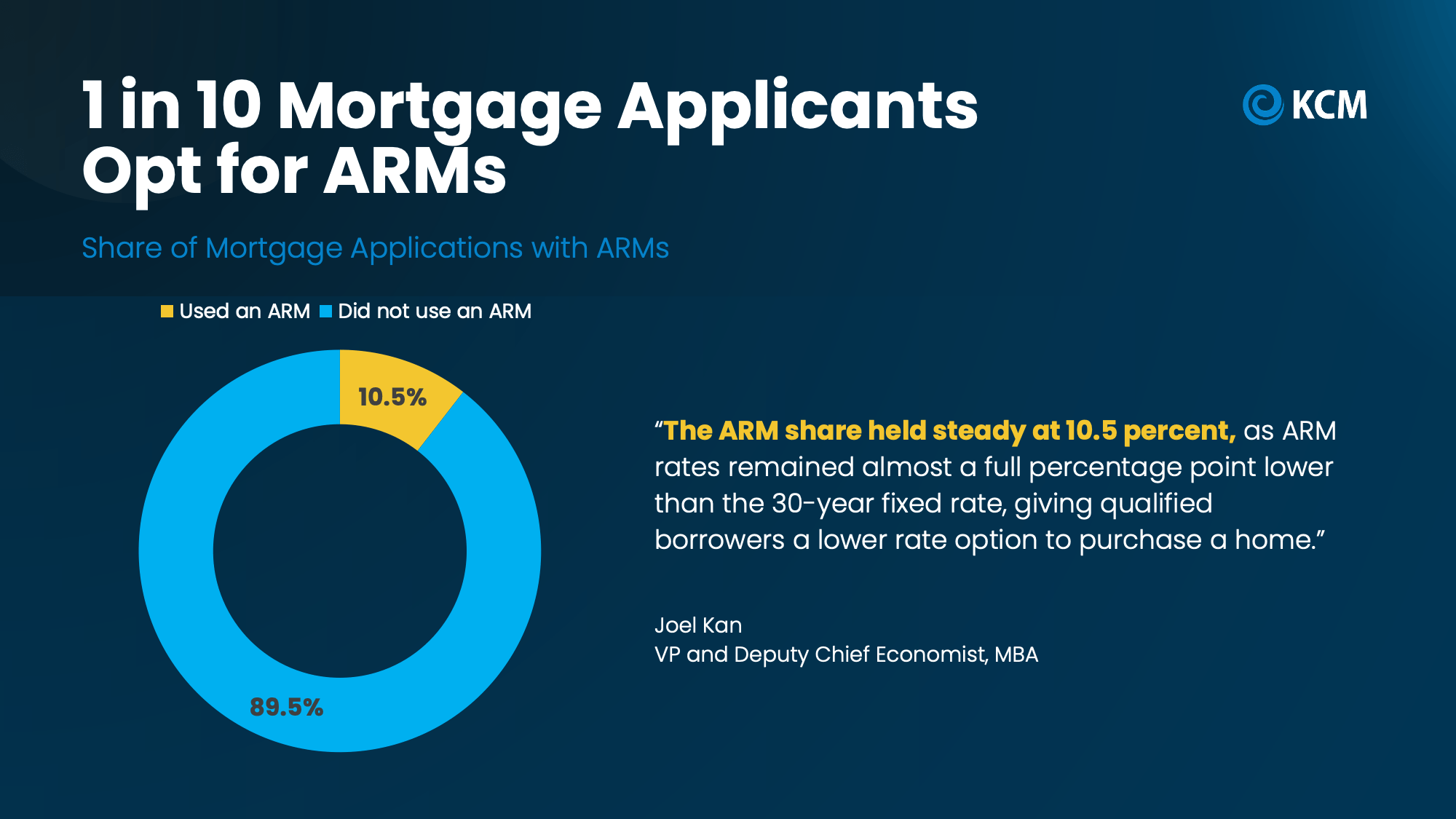
The Mortgage Bankers Association also reported that approximately one in ten mortgage applicants chose an ARM in October 2026, according to the figures cited in the original article. This suggests that adjustable-rate mortgages are attracting attention as buyers search for more manageable financing options.
The first number represents the introductory period. The second indicates how frequently the interest rate can adjust afterward.
With a 5/1 ARM, the interest rate generally remains fixed for the first five years. After that, the rate can change once every year, subject to the loan agreement's adjustment rules and limits.
Think of it like an introductory subscription offer. You receive a special price for a set period, but the cost may change when that period ends. The difference is that a mortgage involves a much larger financial commitment, so the future changes deserve careful attention.
What Happens When the Interest Rate Resets?
The adjustment period is one of the most important parts of an ARM.
When the introductory period ends, the lender recalculates the interest rate using the loan's agreed-upon index and margin. Depending on market conditions, your new rate could be higher or lower than the original rate.
If the rate increases, your monthly mortgage payment may rise. If the rate decreases, your payment may fall, depending on the loan's terms.
Most ARMs include interest-rate caps that limit how much the rate can increase at each adjustment and over the life of the loan. These protections can reduce the risk of sudden, unlimited increases, but they do not guarantee that your payments will remain affordable.
Before signing an ARM agreement, ask your lender to explain the initial adjustment cap, subsequent adjustment caps, lifetime cap, index, and margin. You should also understand the highest possible payment allowed under the loan's terms.
Knowing these details before committing can help you prepare for different financial outcomes rather than being surprised when the introductory period ends.
The Advantages and Disadvantages of Adjustable-Rate Mortgages
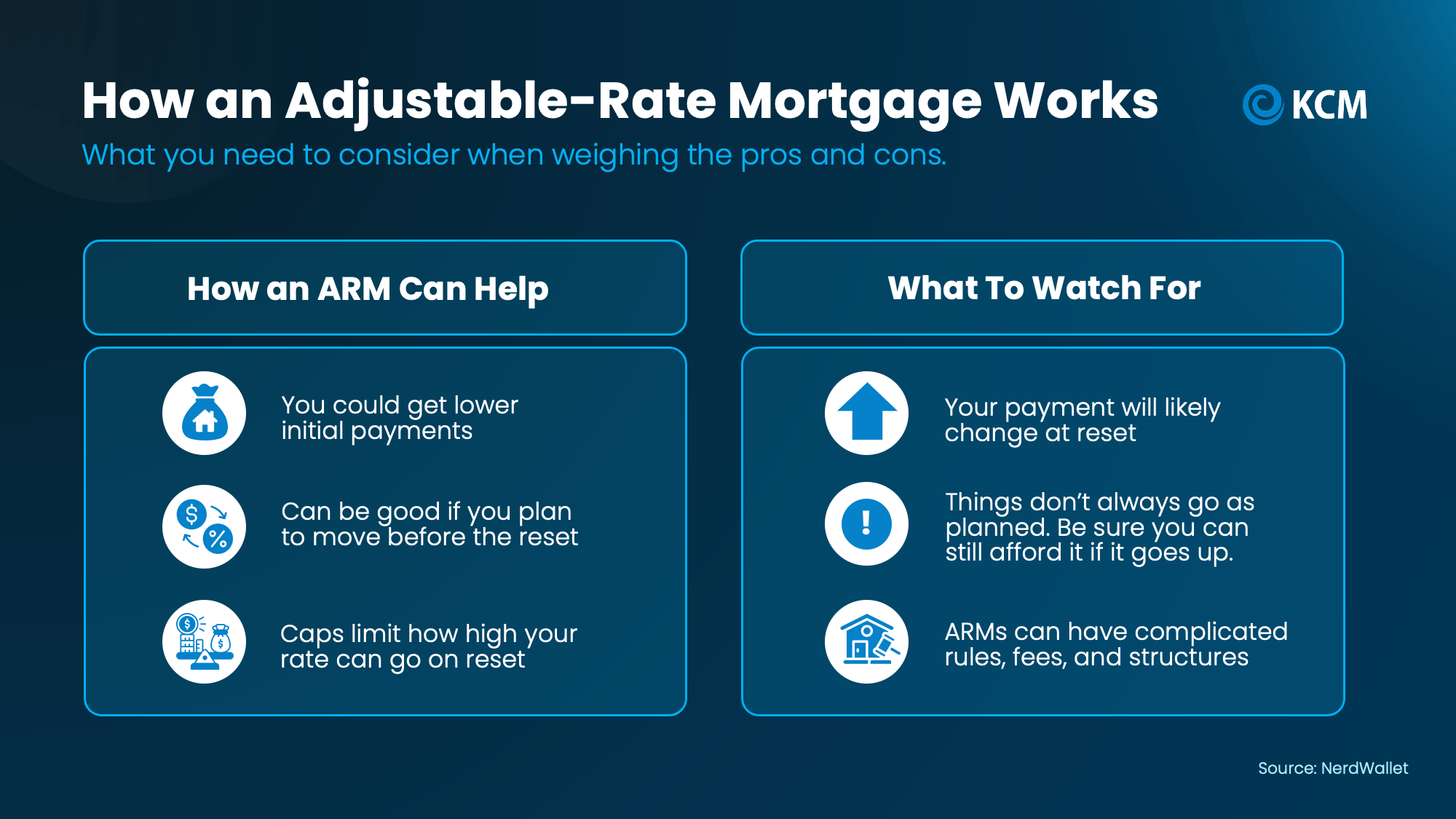
An ARM can be a useful financing option for certain homebuyers, but it comes with both benefits and potential drawbacks.
What Should You Do Before Your ARM Resets?
If you choose an adjustable-rate mortgage, it is important to prepare well before the introductory period expires. You do not have to wait until your payment changes to review your options.
Here are several possible paths to consider.
Keep Your Current Mortgage
If your new payment remains affordable, you may decide to keep the loan. This can be a reasonable choice if you have stable income, manageable debts, and enough savings to handle future expenses.
However, make sure you understand whether additional adjustments could occur later.
Refinance Into a Fixed-Rate Mortgage
Refinancing may allow you to replace your ARM with a fixed-rate loan. This can provide more predictable monthly payments and reduce uncertainty about future interest-rate changes.
Remember that refinancing involves qualifying for a new mortgage. Closing costs, credit requirements, income verification, and current market rates can all affect whether this option is worthwhile.
Refinance Into Another ARM
Depending on your financial circumstances and available offers, you might consider refinancing into another adjustable-rate mortgage with a new introductory period.
This option could provide a lower starting rate, but it also means accepting the possibility of future adjustments again. Compare the total costs carefully before making a decision.
Sell Your Home
Selling the property may make sense if you are already planning to relocate or your housing needs have changed. However, selling involves transaction costs, and the amount you receive depends on the property's market value and your remaining mortgage balance.
Do not assume that selling will always be the easiest or least expensive solution.
Ask Your Loan Servicer About Assistance
If your payments become difficult to manage, contact your mortgage servicer as early as possible. Depending on your circumstances and the programs available, you may be able to discuss loan modification or other assistance options.
The key is to act before financial pressure becomes overwhelming.
Keep Your Finances Ready for Refinancing
If refinancing is part of your plan, maintaining a healthy financial profile is essential.
Pay your bills on time, monitor your credit, and avoid taking on unnecessary debt. Large purchases, new loans, or changes in employment can affect your ability to qualify for refinancing.
It is also wise to build an emergency fund that can cover unexpected expenses and potential increases in your mortgage payment.
Most importantly, do not assume that you will automatically qualify for a new loan when your ARM resets. Your future financial circumstances and lending conditions may be different from what they are today.
A realistic backup plan should include the possibility that refinancing is unavailable or too expensive when you need it.
Are Today's Adjustable-Rate Mortgages Different From Those Before 2008?
Adjustable-rate mortgages became associated with financial hardship during the 2008 housing crisis. Some borrowers had loans with risky features, payments that increased sharply, or lending arrangements that did not adequately assess their ability to repay.
These problems contributed to widespread mortgage defaults and financial losses.
Today's mortgage lending environment includes important borrower protections. In the United States, the Ability-to-Repay rule generally requires lenders to make a reasonable, good-faith determination that a borrower can repay a mortgage. Depending on the applicable requirements, lenders must evaluate documented financial information and consider relevant payment obligations.
For adjustable-rate mortgages, the rules also address how lenders assess a borrower's ability to handle future payments under applicable requirements.
These protections help reduce certain lending risks, but they do not eliminate them entirely. Borrowers can still face higher payments, unexpected expenses, or changes in income.
It is also important to remember that mortgage regulations vary by country and loan type. Anyone considering an ARM should review the rules and protections that apply to their particular mortgage.
How to Decide Whether an ARM Fits Your Financial Goals
Before choosing an adjustable-rate mortgage, take a closer look at your plans and financial stability.
Start by asking yourself how long you expect to stay in the home. If you plan to move before the introductory period ends, an ARM might be worth comparing with a fixed-rate loan. However, make sure you can handle the possibility that your plans change.
Next, evaluate your monthly budget. Could you still afford your mortgage if the interest rate increased to the maximum permitted under your loan agreement? If the answer is no, the lower introductory payment may not justify the risk.
You should also consider your emergency savings, job stability, other debts, and long-term financial priorities.
Finally, compare the full terms of different mortgage offers. Look beyond the advertised introductory rate and review closing costs, adjustment schedules, interest-rate caps, and the total amount you might pay over time.
A qualified mortgage professional can help you compare different scenarios and explain the trade-offs in plain language.
The Bottom Line: Understand Your Mortgage Before You Commit
Today's housing market can make buying a home challenging, especially when mortgage rates push monthly payments beyond a comfortable budget. Adjustable-rate mortgages offer another option for buyers who want to explore potentially lower initial payments.
An ARM may provide short-term savings and flexibility, but those benefits come with uncertainty about future interest rates and monthly costs. The right decision depends on your financial situation, how long you plan to keep the property, and whether you can manage a higher payment if rates increase.
Before making a commitment, ask a trusted loan officer to compare adjustable-rate and fixed-rate mortgages using your actual financial numbers. Review the best-case and worst-case scenarios, understand your loan's protections, and create a realistic backup plan.
Could an adjustable-rate mortgage help you afford a home without putting your financial future at risk? The best way to find out is to compare your options carefully, understand the potential risks, and choose a mortgage that fits not only your budget today but also your financial needs in the years ahead.
Recent Posts









GET MORE INFORMATION