Low Mortgage Rates or More Negotiating Power? Why Homebuyers Rarely Get Both

Buying a home is one of the biggest financial decisions you will ever make. Naturally, you want the best possible deal, a comfortable monthly payment, and a mortgage rate that will not put too much pressure on your budget. But what if getting everything you want at the same time is not always possible?
That is the situation many homebuyers are facing today.
Mortgage rates climbed above 7% this year, making many potential buyers think twice about purchasing a home. Some have decided to wait, hoping rates will eventually drop and make homeownership more affordable. While waiting may sound like a smart move, there is another important factor worth considering: your negotiating power.
In today's housing market, buyers may not have the lowest mortgage rates, but they have something equally valuable: more control during negotiations.
The truth is that low mortgage rates and strong negotiating power rarely happen together. Understanding why can help you make a smarter decision about when to buy a home.
Why Low Mortgage Rates Don't Always Mean Better Deals
Let's look back at 2020 and 2021. During this period, mortgage rates were close to 3%, creating an exciting opportunity for people who wanted to purchase a home.
However, those low rates also attracted thousands of buyers into the housing market. Almost everyone wanted to take advantage of affordable borrowing costs, which created intense competition.
The problem was that there were not enough homes available for everyone.
With more buyers competing for fewer properties, sellers gained a major advantage. Many homes received multiple offers, and buyers often had to offer more than the asking price just to stand out. Some even agreed to waive home inspections and other protections to make their offers more attractive.
In other words, low mortgage rates did not automatically mean buyers were getting better deals.
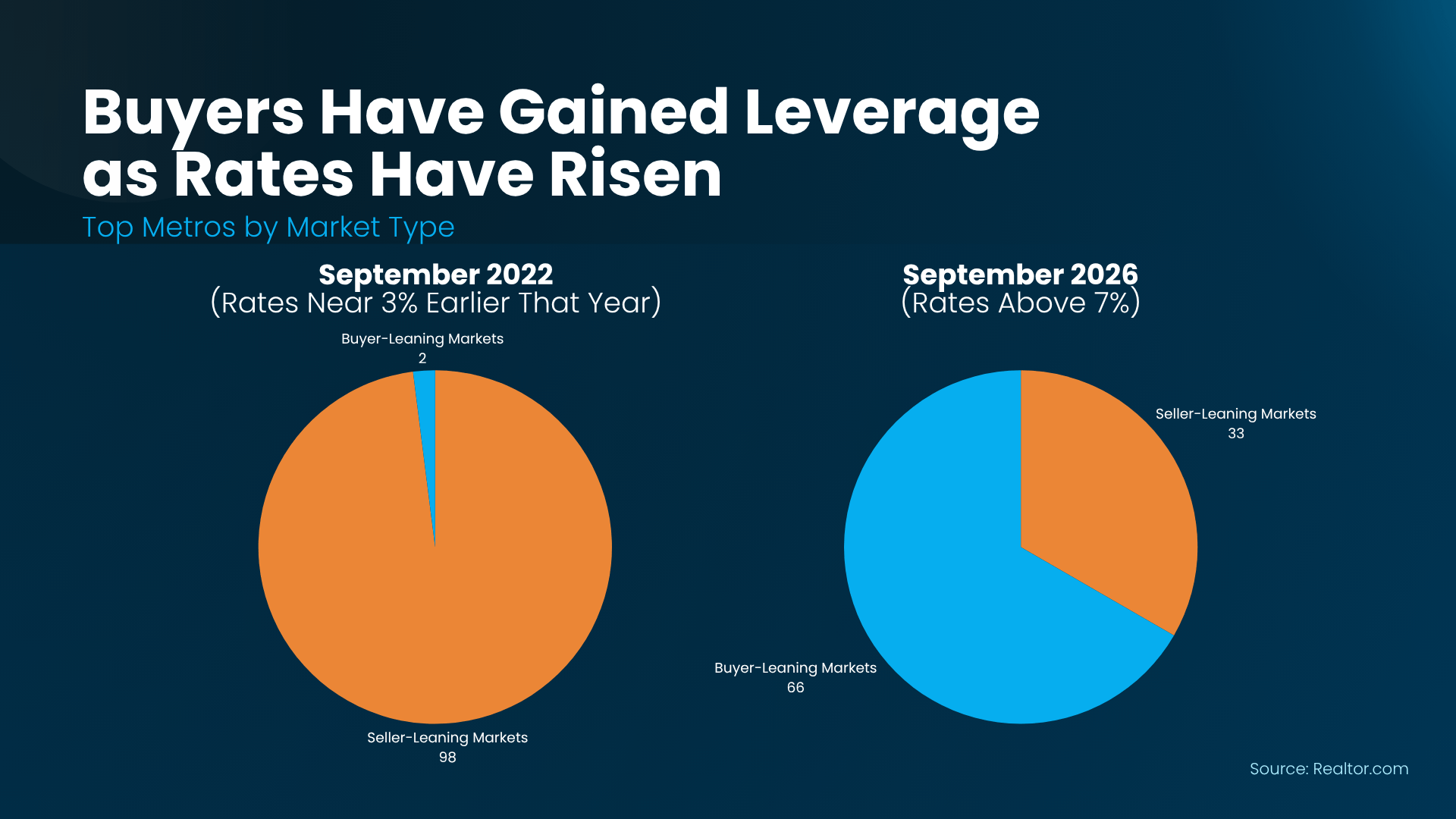
According to Jake Krimmel, Senior Economist at Realtor.com, seller-friendly conditions reached their highest point in spring 2022, when 98 out of 100 major metropolitan areas were seller's markets after two years of mortgage rates near 3%.
This shows how quickly the housing market can change. Even when borrowing money is cheaper, buying a home can become more difficult when competition is high.
How the Housing Market Shifted in Favor of Buyers
Things started changing during the second half of 2022 when mortgage rates increased.
As borrowing became more expensive, many people decided to delay their home purchases. This reduced buyer competition and allowed the number of available homes to grow.
Over time, the housing market became more balanced. Sellers could no longer expect buyers to compete aggressively for every property, and homebuyers started gaining more opportunities to negotiate.
Now, that shift is becoming even more noticeable.
According to a recent Realtor.com report, 66 out of the top 100 metropolitan areas are currently leaning toward buyers. This means more locations are experiencing conditions where buyers have a stronger position when making offers.
Of course, not every city or neighborhood has the same market conditions. Some areas may still favor sellers, while others offer more room for negotiation.
Still, the overall trend gives buyers something they have not had much of in recent years: choices.
What More Negotiating Power Means for Homebuyers
Having negotiating power means you do not always have to accept the seller's original price or conditions.
When there are more homes available and properties take longer to sell, sellers may become more willing to work with serious buyers. They understand that potential customers have other properties to consider.
Lawrence Yun, Chief Economist at the National Association of Realtors (NAR), explains that higher inventory and longer selling periods give buyers improved negotiating power.
But what does that actually mean when you are shopping for a home?
It means you may have more opportunities to ask sellers for better terms instead of simply accepting whatever they offer.
For example, you could negotiate:
-
A lower home price: You may be able to convince the seller to accept an offer below the original asking price.
-
Closing cost assistance: The seller may agree to cover part of your closing expenses, reducing the money you need upfront.
-
Repair credits: If the property needs repairs, you could ask the seller to contribute money toward fixing those issues.
-
Mortgage rate buydowns: You may be able to negotiate for the seller to pay some costs that temporarily or permanently reduce your mortgage interest rate, depending on the loan program.

How Seller Concessions Can Make Buying a Home Easier
One of the biggest advantages of today's buyer-friendly conditions is the possibility of receiving seller concessions.
Seller concessions happen when a homeowner agrees to pay certain expenses to help complete a home sale. Instead of focusing only on the selling price, buyers can negotiate other financial benefits that improve the overall deal.
For instance, imagine finding a home that fits your needs perfectly, but the mortgage payment seems a little too expensive because of the current interest rate.
Rather than immediately walking away, you could ask whether the seller is willing to offer a mortgage rate buydown.
A rate buydown can reduce your interest rate and monthly mortgage payment for a certain period or, in some cases, for the entire loan term. The exact savings depend on the loan agreement and the amount contributed.
You could also negotiate closing cost assistance. This may leave you with more money available for moving expenses, furniture, repairs, or emergency savings.
However, remember that seller concessions are not guaranteed. They depend on the seller's willingness, the property's condition, market conditions, and your loan program's limits.
Working with an experienced real estate professional can help you identify which concessions are realistic and worth requesting.
Why Waiting for Lower Mortgage Rates Could Cost You More
It is understandable why some buyers want to wait for mortgage rates to decrease. A lower interest rate can make monthly payments more manageable and reduce the total interest paid over time.
However, waiting also comes with a possible disadvantage.
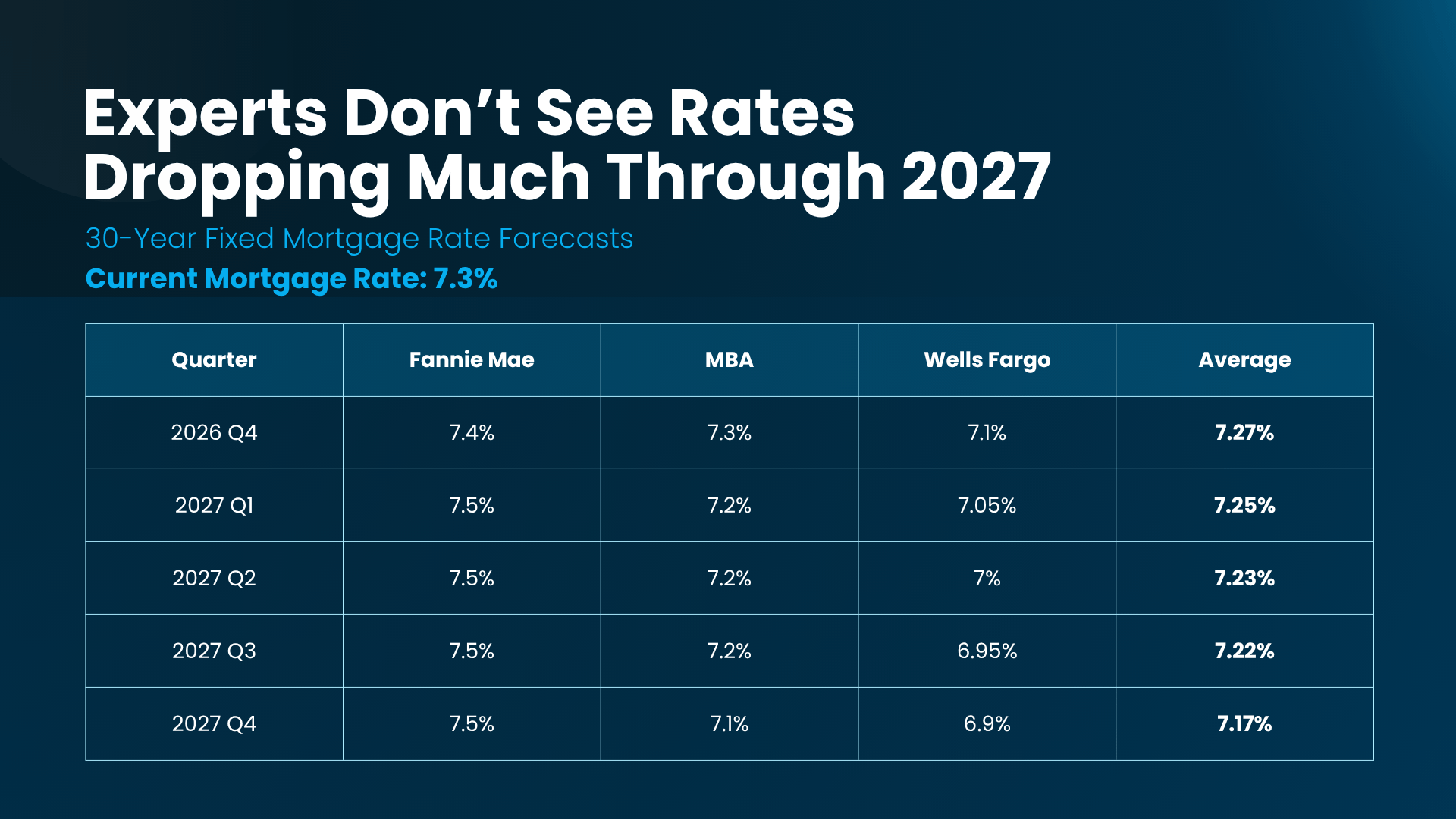
According to forecasts from Fannie Mae, the Mortgage Bankers Association (MBA), and Wells Fargo, mortgage rates are not expected to experience a major decline through 2027.
Although forecasts can change as economic conditions develop, buyers should not assume that significantly lower rates are just around the corner.
There is also another important factor to consider: competition.
If mortgage rates eventually fall, more people may return to the housing market. Buyers who previously postponed their plans could start looking for homes again.
When that happens, demand may increase, making it harder to negotiate with sellers.
More competition could lead to fewer price reductions, fewer seller concessions, and more properties receiving multiple offers.
In short, you might get a lower mortgage rate in the future, but you could lose some of the negotiating advantages available today.
That is the trade-off buyers need to understand.
Should You Buy a Home Now or Wait for Lower Rates?
There is no single answer that works for everyone. Your decision should depend on your financial situation, personal goals, and readiness to become a homeowner.
Buying a home today may make sense if you have stable income, enough savings for upfront expenses, manageable debt, and a property that fits your budget.
You may also benefit from having fewer competing buyers and more opportunities to negotiate favorable terms.
On the other hand, waiting could be the better decision if your finances are not ready, you need more time to save for a down payment, or current monthly payments would stretch your budget too far.
Remember, buying a home should never be a rushed decision.
Before making an offer, consider the following:
The goal is not simply to buy a house as quickly as possible. It is to find a home you can afford without putting your financial future at risk.
The Bottom Line: Use Today's Housing Market to Your Advantage
Getting low mortgage rates and strong negotiating power at the same time is not something homebuyers can always expect. When borrowing costs are low, competition often increases. When competition decreases, mortgage rates may be higher.
Right now, buyers may not be getting the interest rates they hoped for, but they have more opportunities to negotiate with sellers.
From lower asking prices to closing cost assistance and mortgage rate buydowns, these benefits could help make homeownership more affordable.
Waiting for lower mortgage rates might seem like the safest choice, but it is important to remember that the housing market can change. When more buyers return, sellers may regain the advantage, leaving fewer opportunities to negotiate.
You do not have to buy a home today just because the market is more favorable. What matters most is making a decision that works for your finances and future plans.
If you are financially ready to move, now could be a good time to explore your options, compare available properties, and see what kind of deals sellers are willing to offer.
Ready to make the most of today's buyer-friendly housing market? Work with a trusted real estate professional to find properties where sellers may be willing to help with closing costs, repairs, or mortgage rate buydowns. The right negotiation could make a bigger difference than waiting for rates to fall.
Recent Posts







GET MORE INFORMATION