3 Things You Can Actually Control About Your Mortgage Rate Right Now

If you’re thinking about buying a home, there’s a good chance mortgage rates are one of the biggest factors on your mind.
And that makes sense. Even a small change in your mortgage rate can affect your monthly payment, your purchasing power, and how much interest you pay over the life of your loan. So when rates start moving higher, it’s natural to wonder whether you should wait for them to come back down.
But here’s the catch: you can’t control the mortgage market.
Mortgage rates can move because of inflation, economic reports, global events, oil prices, investor activity, and decisions made by the Federal Reserve. In other words, there are plenty of moving pieces—and most of them are completely outside your control.
According to Mortgage News Daily, mortgage rates have risen at various points this year. The recent movement has also been influenced by broader economic conditions and expectations surrounding Federal Reserve policy.
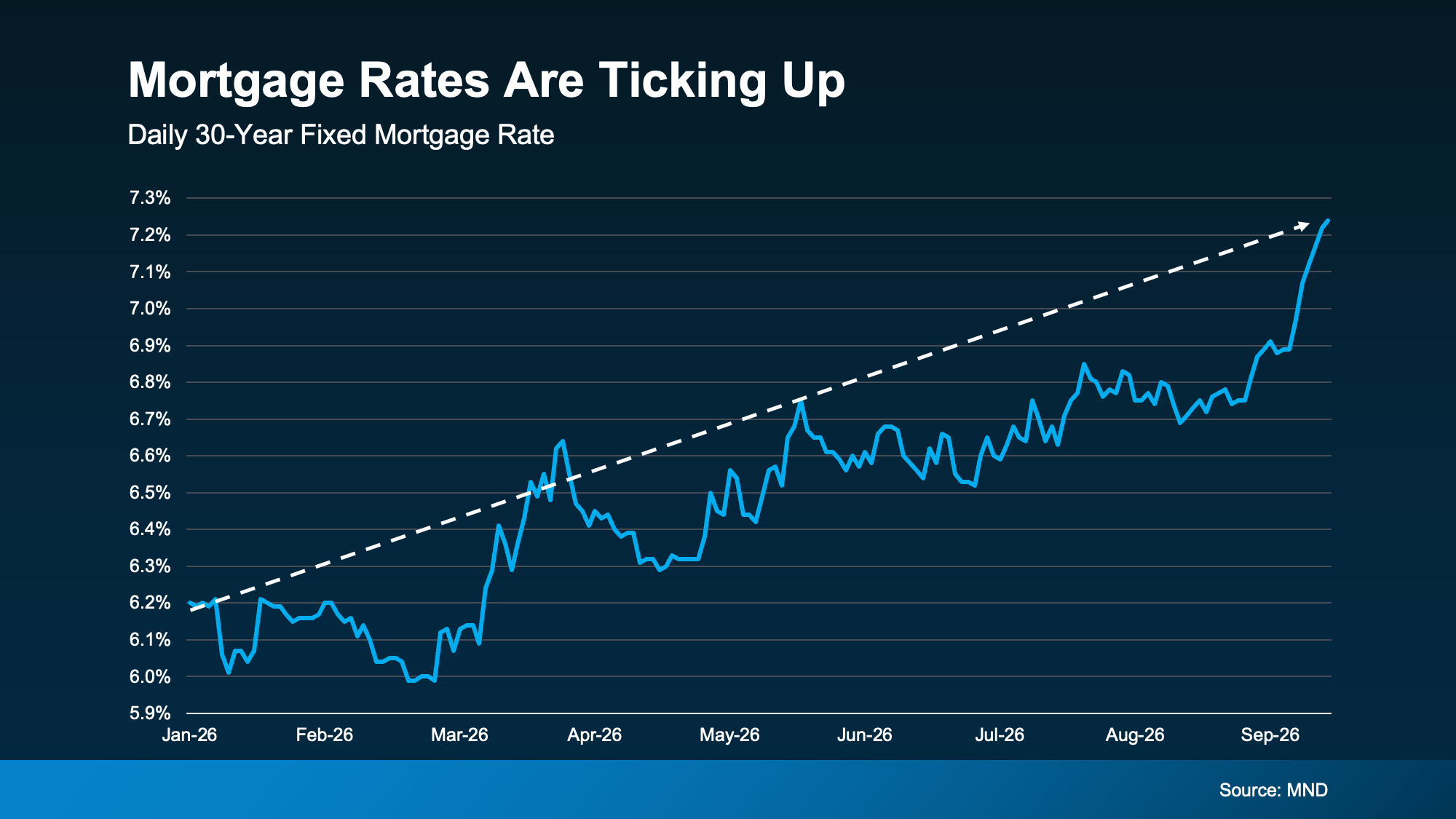
That may not be the news you were hoping for. But don’t hit the pause button on your home search just yet.
While you can’t decide where mortgage rates go next, you do have control over several factors that can influence the rate and loan terms you qualify for.
So, instead of trying to predict the market, why not focus on the pieces you can actually change?
Here are three areas worth paying attention to right now.
1. Improve Your Credit Score Before Applying for a Mortgage
Your credit score is one of the most important pieces of your mortgage application.
Think of it as part of your financial report card. Lenders use your credit history and score, along with other factors, to evaluate your creditworthiness and determine what loan options and pricing may be available to you.
Generally, a stronger credit profile can give you access to more favorable loan terms. Freddie Mac notes that borrowers with higher credit scores may have more options, including potentially better loan terms and lower interest rates.
That means improving your credit before applying for a mortgage can be worth the effort.
But what if your credit score isn’t where you want it to be?
Don’t panic. You may have time to work on it.
Start by checking your credit reports for errors or accounts you don’t recognize. You’ll also want to keep up with payments and be mindful of how much available credit you’re using. Avoid taking on unnecessary new debt right before applying for a mortgage, too.
Why does this matter?
Imagine two homebuyers looking at the same property and borrowing a similar amount. If one qualifies for a better mortgage rate, that difference can add up over hundreds of monthly payments.
A small improvement today could potentially make your mortgage more manageable tomorrow.
Of course, your credit score isn’t the only factor lenders consider. Your income, debt, down payment, loan type, property, and overall financial situation can all play a role.
If you’re unsure where you stand, talk with a trusted mortgage professional before you start making major financial moves.
2. Compare Mortgage Loan Options
Here’s something many buyers overlook: there isn’t just one type of mortgage.
The loan program you choose can affect your interest rate, monthly payment, upfront costs, and long-term financial picture.
Depending on your situation, you may encounter options such as conventional, FHA, VA, and USDA loans. Each has different eligibility requirements, costs, and features.
The length of your mortgage matters, too.
A 15-year mortgage generally comes with higher monthly payments but allows you to pay off the loan faster and potentially pay less total interest. A 30-year mortgage typically spreads payments over a longer period, which can make the monthly payment more manageable but may result in more interest paid over time.
Then there’s the question of fixed versus adjustable rates.
With a fixed-rate mortgage, your interest rate generally stays the same throughout the loan term. An adjustable-rate mortgage, or ARM, can begin with a lower introductory rate but may change later according to the terms of the loan.
So which option is right for you?
That depends on your circumstances and your long-term plans.
This is where comparing mortgage options becomes important. Don’t simply look at the interest rate printed on a loan estimate and assume the lowest number automatically means the best fit.
Look at the bigger picture.
Consider the interest rate, annual percentage rate, closing costs, monthly payment, loan term, potential adjustments, and other fees. A loan with a slightly lower advertised rate may not necessarily have the lowest overall cost once all expenses are considered.
And don’t be afraid to speak with more than one lender.
Getting multiple quotes can help you understand what different lenders are offering and give you a clearer picture of the options available to you.
Think of it like shopping for a car. You wouldn’t necessarily buy the first one you see without comparing the price, features, financing, and long-term costs. Your mortgage deserves the same level of attention.
3. Look at New Construction Homes With Mortgage Incentives
Here’s an option that might surprise some buyers: the home itself can influence the financing opportunities available to you.
If you’ve been focused exclusively on existing homes, consider taking a look at new construction communities, too.
Why?
Builders sometimes offer incentives designed to attract buyers. Depending on the community, lender, and promotion, those incentives may include contributions toward closing costs or temporary or permanent mortgage rate buydowns.
A rate buydown can reduce your mortgage interest rate for a certain period—or, in some cases, for the life of the loan—depending on the specific program.
That can potentially lower your monthly payment.
And there’s another reason new construction deserves a closer look.
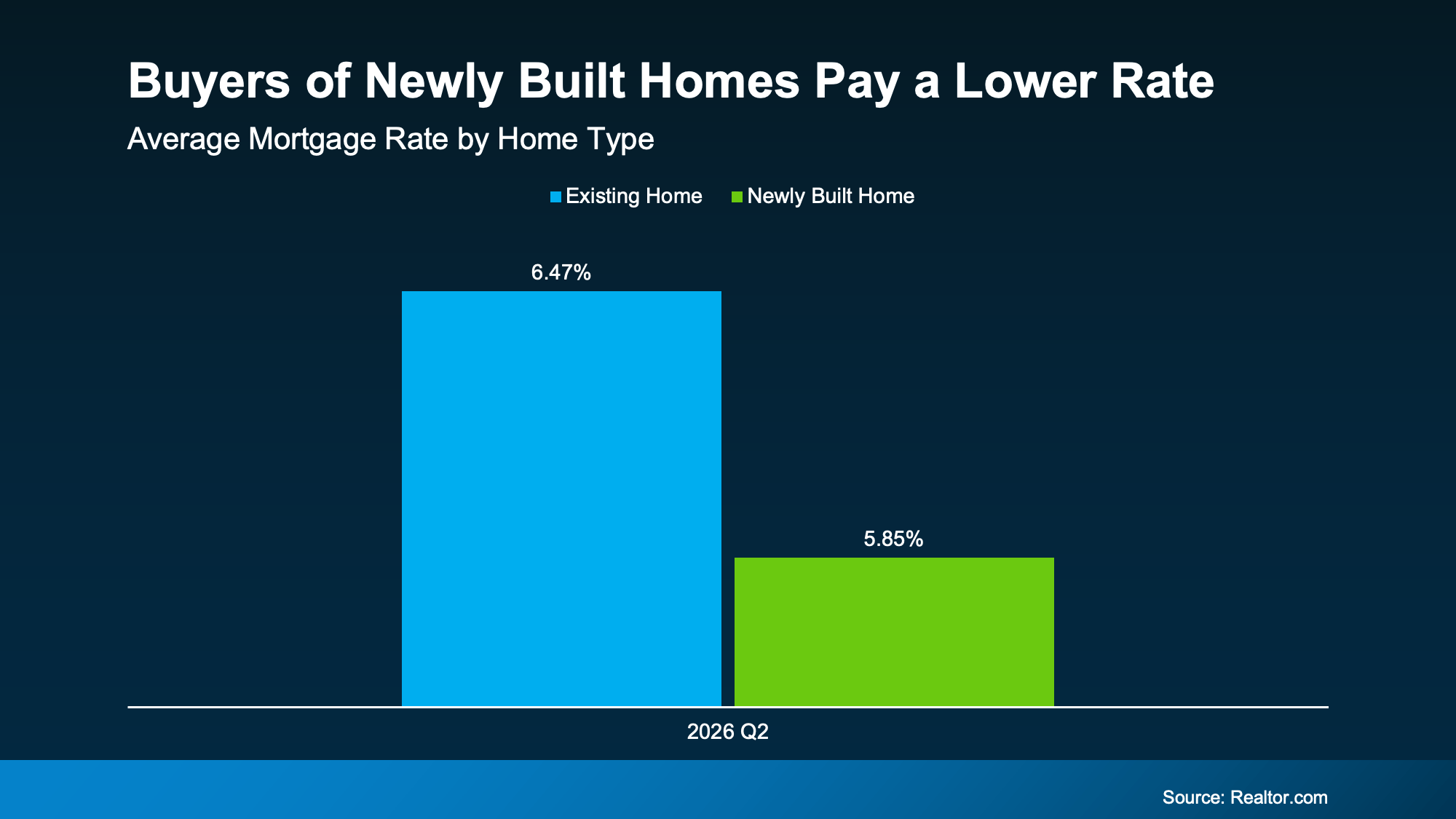
According to Realtor.com, buyers of newly built homes recently secured lower average mortgage rates than buyers of existing homes. Builder incentives and financing programs can be one reason new construction may offer different financing opportunities.
Of course, this doesn’t mean every newly built home will come with a lower mortgage rate.
Builder incentives vary by location, development, lender, inventory, and time of year. Some offers may also come with specific conditions or require you to use the builder’s preferred lender.
That’s why it’s important to look beyond the headline offer.
Ask questions such as:
- What exactly is the builder offering?
- Is the incentive a temporary or permanent rate buydown?
- Are there restrictions on the financing?
- Do I have to use a preferred lender?
- What are the closing costs?
- How does the incentive affect the overall cost of the home?
- What happens to the payment after an introductory period ends?
Your real estate agent and lender can help you compare the numbers.
Don’t Try To Predict Mortgage Rates—Focus on What You Can Control
Mortgage rates can feel like a moving target.
One week, you may hear that rates are falling. The next, they’re climbing again. Then another economic report comes out and everyone starts talking about what the Federal Reserve might do next.
It can become exhausting.
But trying to perfectly time mortgage rates is a little like trying to predict tomorrow’s weather months in advance. You can study the forecast, but you still can’t control the clouds.
What you can control is your own preparation.
You can work on your credit. You can compare lenders and mortgage programs. You can explore different loan terms. You can consider both existing and newly built homes. And you can evaluate incentives that could potentially make homeownership more affordable.
That shift in mindset can make the homebuying process feel much less overwhelming.
What Should You Do Before Buying a Home?
If you’re planning to buy soon, start by getting a clear picture of your finances.
Check your credit. Review your debts and monthly expenses. Determine how much cash you have available for a down payment and closing costs. Then speak with a lender about the mortgage programs you may qualify for.
At the same time, talk with your real estate agent about the homes available in your price range—including new construction communities that may offer financing incentives.
Most importantly, look at the complete cost of the mortgage, not just the advertised interest rate.
Your goal isn’t simply to find the lowest number on a screen. It’s to find financing that fits your budget, your goals, and your plans for the home.
The Bottom Line
You can’t control what happens to mortgage rates tomorrow.
You can, however, control how prepared you are to get the best terms available for your financial situation.
Your credit score, mortgage loan options, and choice between existing and newly built homes can all affect the financing opportunities available to you.
So instead of waiting for the perfect mortgage rate to appear, focus on the factors you can actually influence.
Ready to explore your options? Connect with a trusted lender and real estate professional, compare the numbers, and make a homebuying plan that works for your budget.
Recent Posts









GET MORE INFORMATION