Renovate or Relocate? How to Choose the Best Home for Aging in Place

So, what happens when the home you love no longer fits your needs as comfortably as it once did? Should you renovate your current house or move to a community designed for older adults?
There is no single answer that works for everyone. Some homeowners prefer to stay in a familiar place filled with memories, while others welcome the chance to enjoy a simpler lifestyle with fewer responsibilities. Both options have their advantages, and understanding them can help you make a decision that supports your comfort, independence, and future plans.
Before making your next move, here is what you should consider when deciding whether to renovate your home or relocate to a 55+ community.
Aging in Place: What Does It Take to Stay in Your Current Home?
Aging in place means continuing to live in your own home as you get older instead of moving to another residence or senior living community. For many people, this option is appealing because it allows them to maintain their independence, stay close to loved ones, and remain connected to their neighborhood.
However, loving your home and being able to live in it comfortably for years to come are two different things.
Most houses were not originally designed with the needs of older adults in mind. Narrow doorways, steep staircases, slippery bathroom floors, and entrances with steps can create challenges as mobility changes. Even everyday activities, such as getting into the shower or carrying groceries inside, may eventually require extra effort.
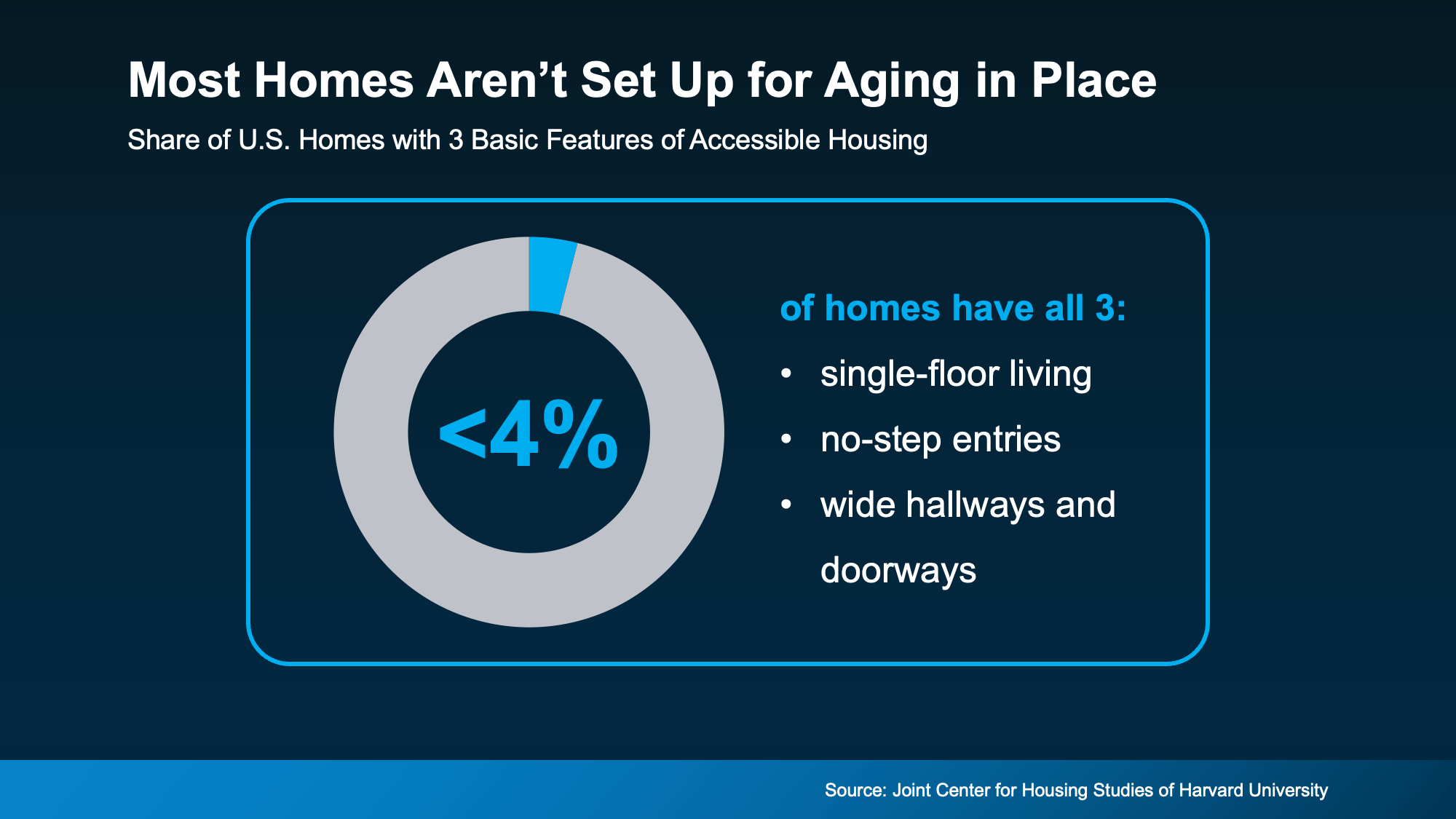
Research from the Joint Center for Housing Studies of Harvard University highlights this challenge. According to its report on housing for older adults, fewer than 4% of homes have essential accessibility features, including single-floor living, step-free entrances, and wide hallways and doorways.
Common Home Renovations for Older Adults
The good news is that you do not always need to make major structural changes to improve your home's safety and accessibility. Sometimes, a few carefully planned upgrades can make a meaningful difference.
The National Association of Home Builders reports that 56% of remodelers take on aging-in-place projects. Common improvements include installing grab bars, creating curbless showers, and widening doorways to make moving around the house easier.
Other useful upgrades may include:
- Improved lighting: Brighter rooms, hallways, and staircases can help reduce the risk of trips and falls.
- Non-slip flooring: Replacing slippery surfaces with safer flooring can make everyday movement more comfortable.
- Lever-style door handles: These are often easier to operate than traditional round knobs.
- Single-floor living arrangements: Moving essential activities to one level can reduce the need to climb stairs.
- Accessible bathrooms: Walk-in showers, grab bars, and strategically placed seating can improve safety and convenience.
The right improvements depend on your home's layout, your budget, and the activities you want to continue doing independently.
The Hidden Challenges of Remodeling
Although renovations can make your home more accessible, the process itself can be demanding.
Construction often brings noise, dust, unfamiliar workers, and temporary disruptions to your daily routine. Depending on the project, you may need to stop using certain rooms or arrange alternative bathroom or kitchen facilities while the work is underway.
You will also need to compare contractor estimates, coordinate schedules, select materials, and monitor progress. Larger projects may take weeks or months to complete, and unexpected expenses can arise along the way.
For some homeowners, these inconveniences are worth the long-term benefits. For others, managing a renovation may feel like more work than they want to take on at this stage of life.
That is why it is important to look beyond the renovation budget. Consider the time, energy, and temporary discomfort involved, too.
Home Equity: Could Your Current Property Help Fund Your Next Move?
If the thought of a major renovation does not appeal to you, selling your home may provide another path forward.
One financial factor worth considering is home equity.
Home equity is the difference between your property's current market value and the amount you still owe on your mortgage. As you pay down your mortgage and your property value changes over time, your equity may grow.
For example, imagine your home is worth $400,000 and you have $100,000 remaining on your mortgage. Your estimated home equity would be $300,000 before selling expenses and other costs.
Your actual proceeds would depend on your home's sale price, outstanding mortgage balance, closing costs, and any other obligations tied to the property.
For older homeowners who have spent decades paying down their mortgages, this equity may represent a valuable financial resource.
Jess Catorc, co-founder of Carry, explains that home equity can become a financial cushion for older homeowners as mortgage payments and changes in property values build wealth over time.
Using Home Equity to Make Your Next Home More Comfortable
Selling your current home may allow you to put some of that equity toward a property that already meets your needs.
Instead of paying for renovations, you could purchase a home with fewer stairs, a more accessible bathroom, or a smaller yard that requires less maintenance. Depending on your finances and local housing market, you might also be able to reduce your housing expenses.
However, it is important to calculate the numbers carefully.
Selling a property involves expenses, and purchasing another home comes with its own costs. Moving fees, taxes, insurance, association dues, and ongoing maintenance should all be included in your calculations. If you plan to buy another property, compare its total cost of ownership with the expected cost of remaining in your current home.
A financial cushion can provide greater flexibility, but it should be planned around your long-term needs rather than the sale price alone.
Why Consider Moving to a 55+ Community?
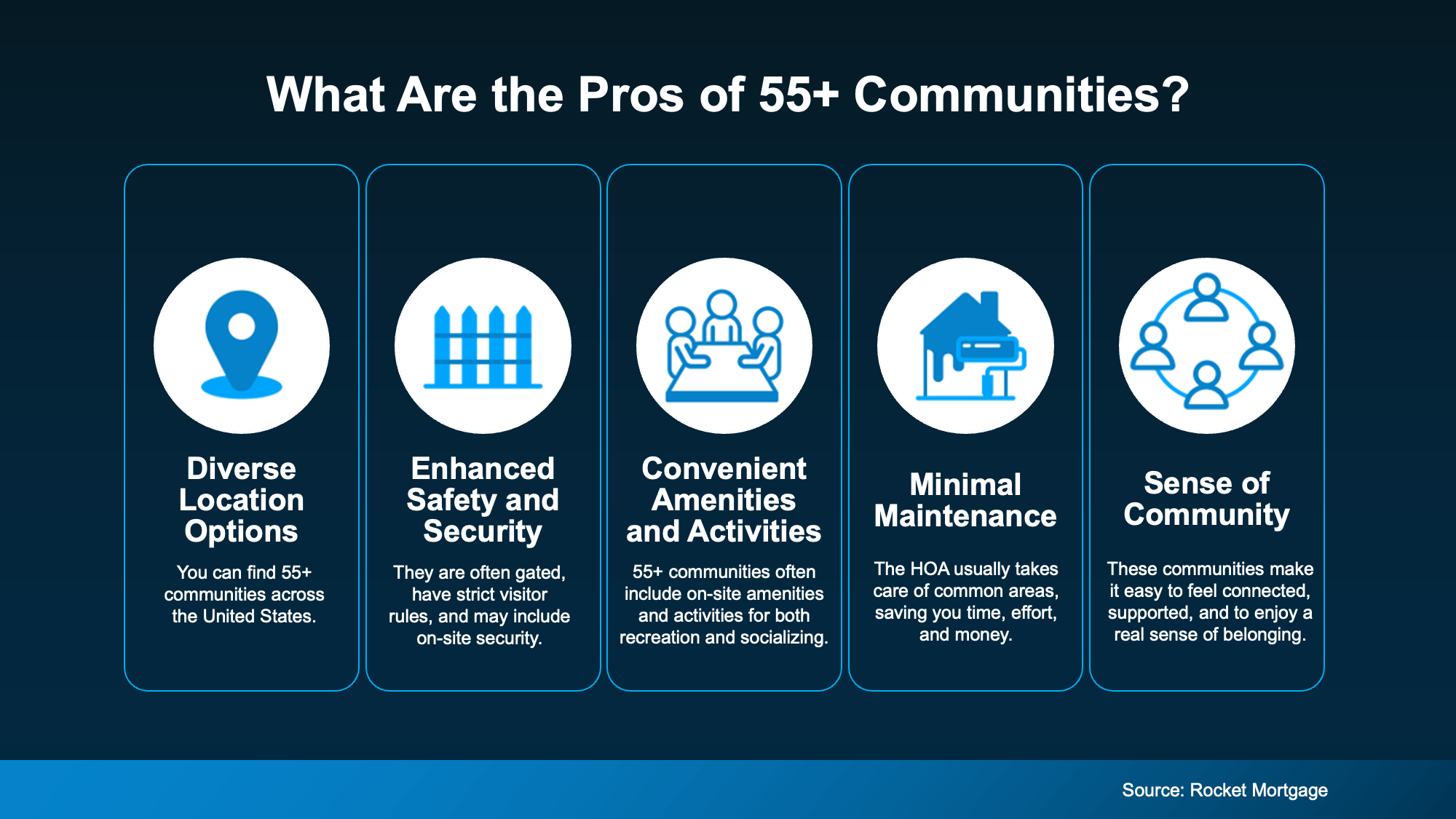
For homeowners who want less maintenance and more opportunities to connect with others, a 55+ community may be worth exploring.
These communities are generally designed for adults aged 55 and older and may offer homes, shared facilities, social activities, and services suited to this stage of life. Their features vary, so it is important to research each community rather than assume every location offers the same benefits.
One of the biggest advantages is convenience. Instead of spending time coordinating multiple home improvements, you may be able to move into a property that already has features suited to your lifestyle.
Depending on the community, you might find single-story homes, accessible layouts, landscaped walking paths, fitness facilities, clubhouses, swimming pools, or organized social events.
Final Thoughts: Choose the Home That Fits Your Future
Deciding whether to renovate or relocate is a personal choice. Your current house may hold decades of memories, but your future comfort and safety deserve just as much attention.
Renovating can help you stay in a familiar place while adapting it to your changing needs. Moving to a 55+ community may offer a more convenient lifestyle, fewer maintenance responsibilities, and new opportunities to connect with others.
Neither option is automatically better. The right decision is the one that makes sense for your finances, health and mobility needs, relationships, and long-term goals.
If you are unsure where to begin, start by evaluating your current home, estimating the cost of necessary improvements, and exploring what other housing options are available in your area.
A thoughtful plan today can give you greater peace of mind tomorrow.
Ready to explore your options? Connect with a local real estate professional to discuss your home's potential market value and learn more about available 55+ communities. With the right information, you can make a confident decision about where you want to spend the next chapter of your life.
Recent Posts






GET MORE INFORMATION