Could Remote Work Make Homeownership More Affordable? Here’s How to Make Your Salary Go Further

For many first-time homebuyers, buying a house can feel like trying to solve a puzzle with too many pieces. You save for a down payment, watch your spending, compare mortgage rates, and run the numbers again and again. Yet somehow, homeownership can still seem just out of reach.
But what if the problem isn't only how much you earn?
What if where you live could be just as important as your salary?
For people who can work remotely, that's a question worth asking. Remote work has changed more than where people open their laptops each morning. It has also changed the way some workers think about choosing a city, buying a home, and building a life.
If you aren't required to live within commuting distance of an office, you may have something other buyers don't: the freedom to choose a location where your income stretches further.
Remote Work Gives Homebuyers More Freedom
For decades, where people lived was often closely connected to where they worked. If your job was in a major metropolitan area, you generally needed to live within reasonable commuting distance. That often meant paying a premium for housing simply because you needed to be close to employment centers.
Remote work has disrupted that equation.
Instead of asking, "How close can I get to my office?" remote workers can increasingly ask, "Where can I build the life I want while making the most of my income?"
That's a major shift for first-time homebuyers.
According to FlexJobs, remote job postings increased by 22% from the previous quarter, marking another consecutive quarter of double-digit growth. While remote opportunities vary by industry and employer, the broader trend highlights how flexibility can influence where people choose to live.
And the possibilities aren't limited to moving across the country.
A remote worker might move from an expensive urban neighborhood to a more affordable suburb. Someone living in a high-cost state could consider a smaller city with lower housing expenses. Another buyer might simply move farther from a major employment hub while maintaining the same job.
Think of it like stretching a rubber band. Your income may stay the same, but changing your location can sometimes give that income more room to work.
Your Salary May Go Further in a Lower-Cost Area
Home prices tend to get most of the attention when people compare housing markets. But the purchase price of a home is only one piece of your monthly budget.
You also have groceries, utilities, transportation, insurance, property taxes, dining, entertainment, and all the little expenses that add up over the course of a year.
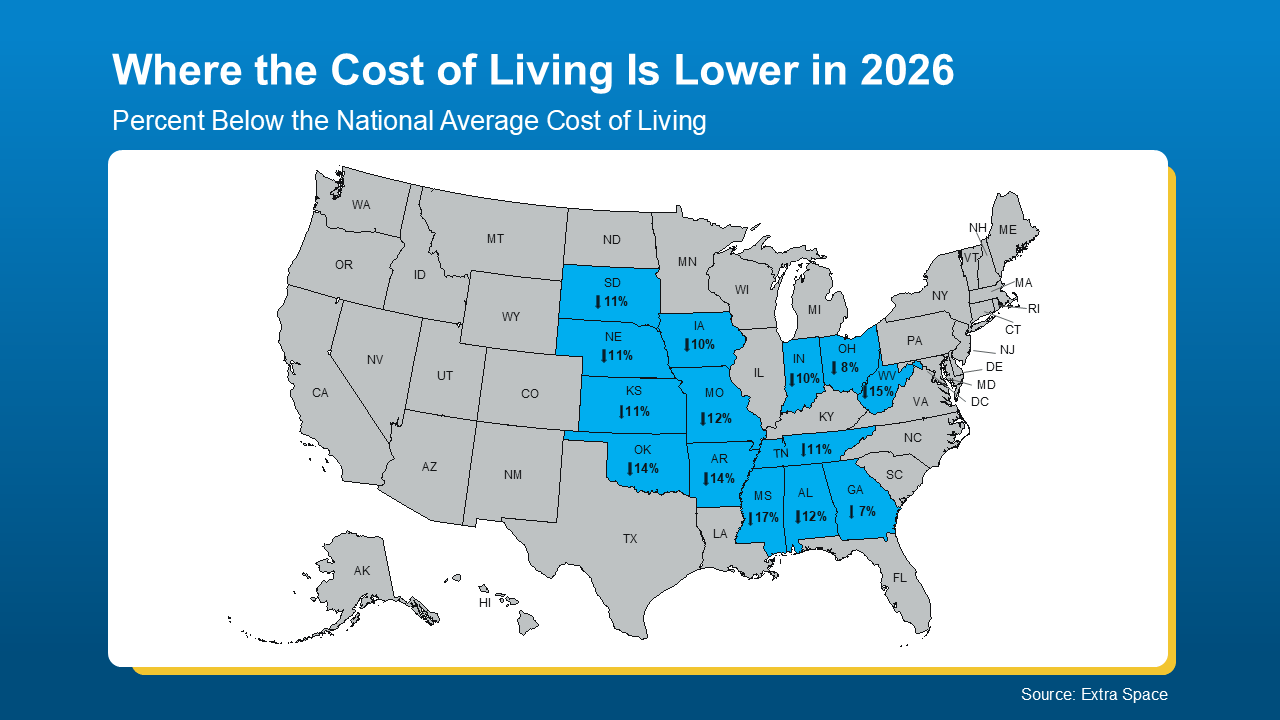
That's where cost of living becomes important.
Some states and communities are significantly less expensive than the national average. Data from Extra Space, for example, has identified states such as Mississippi and West Virginia among areas where overall living costs are substantially below the national average.
For Mississippi, the cost of living is roughly 17% below the national average, while West Virginia is approximately 15% below.
Those differences may not sound dramatic at first. But imagine what happens when lower everyday expenses are combined with a more affordable home.
You could potentially have more room in your budget for a down payment, emergency savings, home improvements, retirement contributions, or simply enjoying your life.
That's one of the biggest advantages remote workers should consider when evaluating where to buy a home.
Affordable Housing Isn't Just About the Listing Price
Let's say you find two homes that look relatively similar.
One costs $400,000 in a high-cost market. Another costs $275,000 in a lower-cost community.
At first glance, the second home obviously looks more affordable. But the real comparison goes deeper.
What are the property taxes?
How much will homeowners insurance cost?
How expensive are utilities?
What will you spend on groceries?
Do you need two cars because public transportation isn't available?
How far will you need to travel for healthcare, entertainment, or other services?
These questions matter because home affordability is about the total cost of living—not just the mortgage payment.
A cheaper house doesn't automatically mean a cheaper lifestyle. On the other hand, a community with a lower overall cost of living can sometimes give a homeowner substantially more breathing room.
That's why remote workers should evaluate an entire community rather than simply searching for the lowest home price.
Where Should Remote Workers Consider Buying a Home?
There isn't one perfect destination for every remote worker.
The right location depends on your income, lifestyle, family situation, priorities, and the kind of community you want to call home.
Some buyers may prefer a smaller city with a slower pace of life. Others might want access to outdoor recreation. Some want restaurants, shopping, entertainment, and cultural attractions nearby. Others may prioritize quiet streets and more space.
The important thing is that remote work gives you more options.
Instead of automatically choosing the city where your employer is located, you can potentially search for communities that offer a better combination of affordable housing, quality of life, and everyday convenience.
As Forbes has noted, remote workers can have greater flexibility to choose a home base based on factors such as space, cost of living, access to nature, and lifestyle.
That's a powerful advantage when you're trying to buy your first home.
Don't Forget the Practical Side of Remote Work
Of course, moving somewhere cheaper isn't as simple as finding a lower-priced house and packing your boxes.
If your home is also your workplace, your new community needs to support your career.
Before choosing a location, ask yourself a few practical questions.
Is the Internet Reliable?
For remote workers, a reliable internet connection isn't a luxury. It's part of your office.
A beautiful home won't feel like a bargain if unreliable internet causes missed meetings, dropped calls, or problems uploading important files.
Before purchasing, research available internet providers, connection types, speeds, and reliability in the specific neighborhood—not just the city.
Does the Community Fit Your Lifestyle?
Affordability matters, but so does quality of life.
Will you enjoy living there?
Are there parks where you can take a walk after work? Coffee shops where you can get out of the house? Restaurants you enjoy? Grocery stores nearby?
And perhaps most importantly, will you have opportunities to meet people?
Working remotely can eliminate the natural social interaction that comes with an office. Finding a community where you can establish friendships and routines can make a huge difference.
What About Transportation?
If you're moving from a city with extensive public transportation to a smaller community, your transportation costs could change significantly.
You may need a car—or even two.
That's why it's important to look beyond the home itself. A neighborhood that appears affordable may become considerably more expensive if you have to drive long distances for work, shopping, healthcare, and entertainment.
A Local Real Estate Agent Can Help You Find the Right Fit
Searching for an affordable place to live doesn't necessarily mean moving to another state.
Sometimes the better opportunity is much closer than you realize.
Every housing market has neighborhoods, suburbs, and communities with different price points. One area might be expensive while another, just 20 or 30 minutes away, offers more affordable homes without forcing you to completely change your lifestyle.
That's where a knowledgeable local real estate agent can make a difference.
An agent can help you compare neighborhoods based on more than home prices. They can help you understand local market conditions and identify areas that match your budget while still offering the features you care about.
Maybe you want walkability.
Maybe you need access to parks.
Maybe great restaurants are important.
Perhaps you're looking for a quiet neighborhood, convenient shopping, or a community with weekend farmers' markets.
The goal isn't simply to find the cheapest house you can afford.
It's to find a home that fits both your budget and your life.
Remote Work Could Change the Homebuying Equation
For first-time buyers, affordability can sometimes feel like a door that's slowly closing.
But remote work may open another door.
If your career allows you to work from home, you may no longer have to base your housing search entirely around your employer's location. That flexibility can give you the opportunity to explore communities where housing and everyday expenses are more manageable.
Of course, remote work isn't a magic solution to rising housing costs. You still need to consider your income, mortgage qualification, savings, taxes, insurance, internet access, and the overall cost of living.
But it can give you something incredibly valuable: choice.
And sometimes, the difference between "I can't afford a home here" and "I can afford a home" isn't a dramatically higher salary.
It may simply be a different location.
The Bottom Line
Remote work has changed the traditional relationship between jobs and geography. If you have the flexibility to work from anywhere, you may have more freedom to choose a community based on affordability, lifestyle, and long-term goals rather than proximity to an office.
So before you decide homeownership is out of reach, take another look at the map.
Could your paycheck go further somewhere else?
Could moving a little farther from an expensive city make your monthly budget more comfortable?
Could a different neighborhood—or even a different state—put homeownership within reach?
You won't know until you explore your options.
Ready to see where your budget could take you? Connect with a local real estate professional and start exploring communities that fit both your finances and the life you want to build.
Recent Posts







GET MORE INFORMATION