Most Home Sales Close: How To Keep Your Home Sale on Track From Listing to Closing

Selling a home can feel like running a marathon. You prepare your property, list it, welcome buyers, negotiate offers, sign a contract, and then wait for closing day. When everything seems to be moving in the right direction, one question can still linger in the back of your mind: What if the deal falls apart at the last minute?
It is a reasonable concern. After all, a home sale involves inspections, financing, appraisals, contingencies, paperwork, and plenty of moving parts. One unexpected issue can make sellers nervous.
The good news? Most pending home sales still make it to the closing table.
While some transactions do fall through, the majority of buyers who enter into a contract are serious about completing the purchase. In today's housing market, many buyers are making a move because of an important life event. They may be starting a new job, relocating, getting married, growing their family, or downsizing for the next chapter of life. These are not usually casual decisions. Buyers often have a real reason to move, which gives them a strong incentive to see the transaction through.
According to recent Redfin data, only about one in seven pending home sales falls through, meaning most sellers successfully make it from contract to closing.
That said, a smooth closing does not happen purely by luck. Preparation matters. And one of the biggest risks to a successful home sale is something sellers can often identify and address before their property ever hits the market.
Why Do Home Sales Fall Through Before Closing?
A signed contract is a major milestone, but it is not the finish line.
Between accepting an offer and handing over the keys, several things still need to happen. The home must pass through inspections, the buyer must secure financing, contingencies may need to be satisfied, and both parties must stay on track with the agreed timeline.
So, what causes some real estate deals to fall apart?
Inspection and Repair Problems
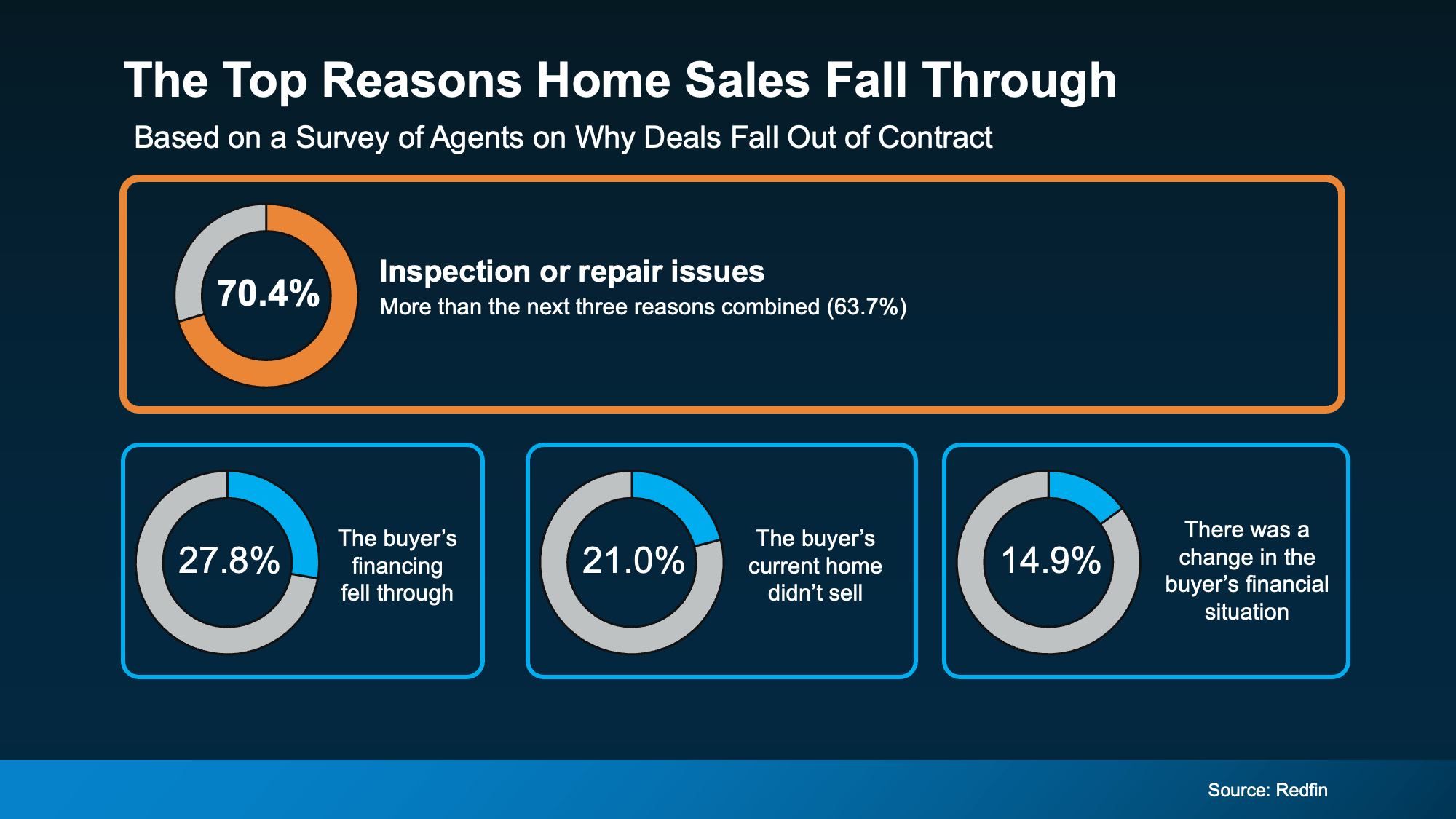
Inspection issues are one of the most common reasons a home sale can become complicated.
A buyer's home inspector may uncover problems involving the roof, electrical system, plumbing, HVAC, foundation, or other important parts of the property. Sometimes the issue is minor. Other times, it can feel like opening a door and discovering an entire room you did not know existed.
Once a significant problem is discovered, the buyer may request repairs, ask for a credit, renegotiate the purchase price, or, depending on the terms of the contract, decide to walk away.
This does not mean every inspection issue will kill a deal. No home is perfect, especially one that has been lived in for years. The challenge is often not the problem itself but the surprise.
Think of it like planning a road trip. A flat tire is much easier to deal with in your driveway than discovering it halfway down the highway. The same principle applies when preparing a home for sale. Finding major issues before listing can give you more control over how you handle them.
Buyer Financing Can Still Fall Through
Another common reason a home sale does not reach closing is a problem with the buyer's mortgage financing.
Even if a buyer has been pre-approved for a loan, the lender still needs to complete the underwriting process and verify the buyer's financial situation before closing.
A buyer's financial circumstances can change during this period. A job change, a large purchase, new debt, missed payments, or other financial changes may affect their ability to qualify for the mortgage they originally expected to receive.
If financing is denied or delayed beyond what the contract allows, the transaction may be at risk.
This is one reason why sellers should look beyond the highest offer when reviewing multiple bids. A strong purchase price is important, but the financial strength of the buyer and the overall structure of the offer can be just as valuable.
After all, an offer only looks impressive on paper until it reaches the finish line.
When a Buyer's Current Home Does Not Sell
Some buyers need to sell their existing property before they can purchase another one.
This type of contingency can add another layer of uncertainty to the transaction. Your buyer may be fully committed to purchasing your home, but their ability to close could depend on whether another buyer successfully purchases theirs.
If their current home takes longer to sell, receives a lower offer than expected, or experiences its own inspection or financing problems, the ripple effect can reach your transaction.
That does not automatically mean you should reject an offer with a home-sale contingency. In some situations, it may still be the best option available.
The key is understanding exactly what you are agreeing to.
A slightly higher offer may not always be the strongest offer. Sometimes, a lower-priced offer with fewer contingencies, a more reliable financing structure, and a flexible closing timeline can provide greater certainty.
This is where having an experienced real estate agent becomes especially valuable.
Why Choosing the Right Offer Matters
It is tempting to focus on one number when reviewing offers: the purchase price.
But selling a home is not as simple as choosing the biggest number on the page.
A strong offer should be evaluated as a complete package. Your real estate agent can help you look at important details such as:
- The buyer's financing and level of pre-approval
- The proposed closing timeline
- Inspection and appraisal contingencies
- Whether the buyer must sell another home first
- Requests for seller concessions or credits
- The amount of earnest money provided
- The likelihood of the buyer successfully reaching closing
Imagine choosing between two bridges.
One looks longer and more impressive, but it has several weak points along the way. The other may not look quite as exciting, but it is sturdy, direct, and built to get you safely to the other side.
The same idea applies to offers.
The best offer is not always simply the highest one. It is the offer that best balances price, terms, timing, and the likelihood of a successful closing.
How a Pre-Listing Inspection Can Help Prevent Surprises
One of the smartest ways to reduce the risk of inspection-related problems is to consider a pre-listing home inspection.
This means hiring an inspector to evaluate your property before you officially put it on the market.
Why does this matter?
Because knowledge gives you options.
If the inspection identifies a major roofing issue, plumbing leak, electrical concern, or another significant problem, you have time to decide what to do before a buyer becomes involved.
You may choose to repair the issue. You might obtain estimates and adjust your pricing strategy. In some cases, it may make more sense to disclose the condition of the property and sell it accordingly.
The important part is that you are making the decision proactively instead of reacting under pressure while a contract deadline is approaching.
A pre-listing inspection can turn a potential surprise into a manageable conversation.
Of course, it is not necessary for every seller or every property. Market conditions, the age of the home, the condition of the property, and local buyer expectations all matter. Your real estate agent can help you determine whether the cost and effort make sense for your specific situation.
Work With a Real Estate Agent Before Problems Become Emergencies
Selling a home involves dozens of decisions, and many of them are easier when you have professional guidance.
A knowledgeable real estate agent does more than place a sign in the yard and upload photos online. They can help you prepare your property, understand local market conditions, identify potential challenges, evaluate offers, negotiate repairs, manage deadlines, and keep the transaction moving toward closing.
More importantly, an experienced agent can help you spot potential problems before they become expensive emergencies.
You cannot control everything.
You cannot personally guarantee that a buyer's loan will be approved. You cannot force their current home to sell. You cannot prevent every unexpected change in their financial situation.
But you can prepare your home.
You can address obvious issues before listing. You can price your property strategically. You can carefully evaluate each offer. And you can work with a professional who understands how to navigate the moving parts of a real estate transaction.
That preparation can make a meaningful difference.
Smart Home Selling Starts Before You List
The best time to protect your home sale is not when something goes wrong.
It is before the first buyer schedules a showing.
Take a close look at your home. Are there repairs you have been putting off? Is the roof nearing the end of its lifespan? Are there plumbing, electrical, or maintenance issues that could raise concerns during an inspection?
You do not necessarily need to renovate your entire home or spend thousands of dollars fixing every cosmetic imperfection.
Instead, focus on being strategic.
Address significant issues when it makes financial sense. Understand the condition of your property. Gather the information you need to make confident decisions. And avoid letting preventable surprises take control of the transaction.
A little preparation before listing can save you from a great deal of stress later.
The Bottom Line: Most Home Sales Make It to Closing
The possibility of a home sale falling through can be stressful, but sellers should remember that most pending transactions successfully reach the closing table.
The key is not trying to control every possible outcome. That would be impossible.
Instead, focus on the factors you can influence.
Prepare your home before listing. Consider whether a pre-listing inspection is right for your situation. Review offers carefully instead of focusing only on the highest price. And work with a trusted real estate professional who can help you navigate challenges before they threaten the deal.
Selling a home is a journey, and like any journey, there may be unexpected bumps along the way. But with the right preparation, a solid strategy, and expert guidance, you can significantly improve your chances of making it all the way to the finish line.
Most home sales close successfully. With smart planning and the right support, yours can too.
Recent Posts






GET MORE INFORMATION